Story by Sarah Salmons
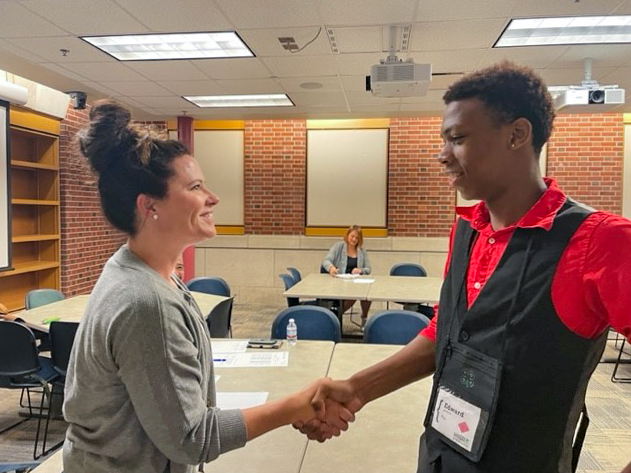
Through a partnership between the College of Education & Human Development and MU Extension, Mizzou faculty are helping young people build the confidence, connections and skills to pursue college and career opportunities.
For young people, imagining a future beyond high school is an important first step toward achieving it. Having the right guidance, encouragement and opportunities can help turn that vision into reality.
Across Missouri, University of Missouri faculty and Extension professionals are working together to help young people take those steps through 4-H Youth Futures Hopeful Paths for Youth Futures, a program that helps middle and high school students prepare for college and careers.


Led by Kellie Seals and Clay Hurdle, faculty jointly appointed to the College of Education & Human Development and MU Extension, the program connects educational research and evaluation with hands-on experiences and meaningful mentorship. Its goal is to help young people strengthen their college and career knowledge, aspirations, confidence and sense of identity while building relationships that support their success.
Since the initiative began in September 2024, the team has expanded the Youth Futures model in Jackson and St. Louis counties, offering more frequent meetings and more comprehensive mentorship than the original program. Working alongside 4-H Youth Development Specialists Melissa Scheer and Justin Strickland, Seals and Hurdle are helping students explore their options and take practical steps toward their goals.
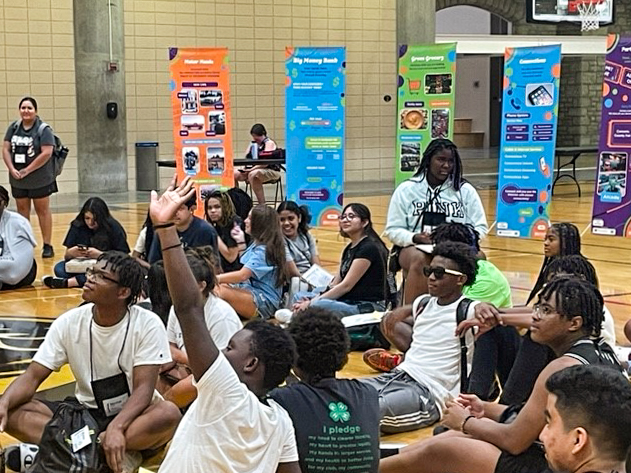
The results are already visible. High school seniors in Kansas City have secured paid internships and scholarships, with some crediting Youth Futures for helping them reach those milestones. In St. Louis, a partner middle school even renamed its class to incorporate 4-H — an unexpected sign of the program’s growing influence.
“The most rewarding part of this work has been witnessing our high school seniors in Kansas City land paid internships and scholarships and hearing their success stories attributed to Youth Futures,” Seals said. “This year, a partner middle school in St. Louis renamed its class to include ‘4-H.’ The unintended outcomes have been invaluable.”
The initiative builds on a broader commitment to preparing Missouri’s young people for what comes next. Since 2023, Youth Futures programming has reached more than 150 students in Jackson and St. Louis counties and more than 3,100 students statewide.
In 2024, MU Extension received a five-year, $607,115 grant from the U.S. Department of Agriculture’s National Institute of Food and Agriculture through its Children, Youth, and Families at Risk program. The funding supports the development and implementation of Hopeful Paths for Youth Futures, helping the team strengthen the program and evaluate its effectiveness.
That combination of direct service and research is central to the work. Seals uses program evaluation to understand what is working, identify opportunities for improvement and train staff and volunteers to strengthen outcomes for young people and the communities they serve. Lessons learned through Extension programming can also inform college and career initiatives across Missouri.
“The work being carried out as a part of the 4-H Youth Futures Hopeful Paths project provides high-impact experiences, educational inputs and meaningful adult support for young Missourians as they seek to position themselves for success in college and career settings beyond their time in the 4-H program,” Hurdle said.
For the team, sustaining that impact also means building strong community partnerships. Working with the Missouri 4-H Foundation, Seals and her colleagues have secured additional support from BTC Bank, FCS Financial, the Patterson Family Foundation, Kyle Kerns, and Ellen Kippel and Ken Donohew.
Those investments help sustain the program, but Seals sees community participation and demonstrated results as equally important to its future. When families, schools and community partners see how programming benefits young people, they have a reason to invest their time, resources and trust.
Looking ahead, Seals hopes to explore how youth development programs can support not only individual students but also their families. Understanding those broader connections could help the team identify additional ways to strengthen the support systems young people need to thrive.
By bringing together faculty expertise, research, Extension resources and community partnerships, Mizzou is helping Missouri’s young people prepare for their next chapters — while investing in the future of the families and communities they will help shape.