Story by Riley Rohler
The Leading the Way in Missouri initiative, presented by the Hook Center for Educational Leadership & District Renewal, celebrates K-12 educators and leaders who are creating meaningful change in their schools and communities. The 2026-27 honorees were selected for their innovation, leadership and commitment to helping students succeed. Matt Villasana, media specialist at Ridgeway Elementary in Columbia Public Schools, is one of four educators recognized this year for creating opportunities that inspire curiosity, build confidence and empower students to take ownership of their learning.
Matt Villasana isn’t one to sit still. He describes himself as someone who gets bored easily, which means he is always looking for new ways to change things up. His love of learning, innovation and creativity can be seen in the ways he serves and shows up for students every day.
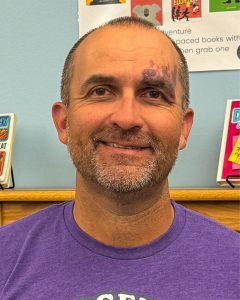
Villasana has spent more than two decades in education, teaching fourth and fifth grade for a combined 10 years, serving as an instructional technology specialist for seven years in Columbia Public Schools and now working as the media specialist at Ridgeway Elementary. Across each of these roles, he has looked for ways to connect with students, help them discover a passion for learning and build their confidence.
“I’m someone who believes if they’re challenged, if they’re engaged and if they want to do it, they’re going to get better at it,” Villasana said.
At Ridgeway, Villasana has brought that philosophy to life through a wide range of programs and initiatives. From reading groups and student-led book recommendations to schoolwide speaking events and student-run media operations, he has found creative ways to engage students while giving them opportunities to take ownership of their learning.
Developing a love of reading
Throughout his career, Villasana has noticed that fewer students seem to be passionate about reading. When asked about their favorite book or author, many students do not have an answer. For Villasana, this is a sign that something needs to change.
“If students don’t see value in reading, if they don’t love what they’re doing, it’s going to be hard for them to progress.”
This realization led Villasana to look beyond simply getting students to read. He wants them to become readers who find enjoyment and value in books.
When he noticed that many students could read at a high level but did not necessarily identify as readers, he began creating small-group opportunities designed to make reading more engaging and social. One of the first initiatives was a Mark Twain reading group. Some of the highest-performing fourth- and fifth-grade readers were invited to read all 12 Mark Twain Award nominee books during the school year. The students met twice a week to discuss what they were reading and set page goals for their next meeting. If they did not finish their goal during free time at school, they took the reading home to stay on schedule.
The structure challenged students to read longer chapter books while also creating a community around reading. The impact of the program was felt inside and outside the school building. Megan Tregnago, a Ridgeway Elementary parent, and Taryn Brinlee, principal of Ridgeway Elementary, described the reading group in a joint statement:
“Not only did it introduce students to a wider range of topics, but it challenged them to persist in reading longer stories, improve their vocabulary and stay accountable to their reading group. Additionally, many teachers got involved by reading along so they could have conversations with the students and join in. This fostered a much stronger culture of reading and appreciation throughout the entire school. Many parents shared that this was the first time they noticed their children reading chapter books, sharing excitement about the stories they read and being interested in reading books on their own.”
Villasana knew students were not going to love every book, and he found that the books students disliked could sometimes generate just as much conversation as their favorites. To extend those conversations beyond the students participating, Villasana created a bulletin board featuring all 12 books. As students finished each book, they added their picture with a thumbs-up or thumbs-down to show whether they enjoyed it.
Villasana described the impact of the reaction board:
“The next thing you know, kids are talking about the board. They’ll walk by in the morning and say, ‘You didn’t like that one?’ and you’ll hear conversations around the building that hadn’t been there before.”
The board became a way for the entire school to participate in the program. Even students who were not part of the groups could see which books their friends enjoyed and seek them out for themselves.
Villasana took the idea of student-to-student recommendations even further with Curly’s Corner, a book preference system similar to Stitch Fix but for books, run entirely by students. Students completed a short form on their iPads sharing their reading preferences, such as whether they enjoy fiction, mysteries, funny books or serious stories. Six students were selected through an application process to run Curly’s Corner. They reviewed preferences, selected books that might match student interests and delivered books and bookmarks to classrooms. Upon finishing the books, students completed star ratings that were displayed on the bulletin board.
One of Villasana’s favorite parts of the program is listening to student members discuss which books to recommend based on what they know about their classmates.
The goal is not simply to get students to read more, but to make reading something they want to discuss and share with one another.
“I got the idea that we can build a culture surrounding reading that encompasses the entire school community,” Villasana said. “It’s been fun seeing the kids progress to the point where they are having conversations with each other and adults outside the classroom about the books they are reading.”
Empowering students through ownership
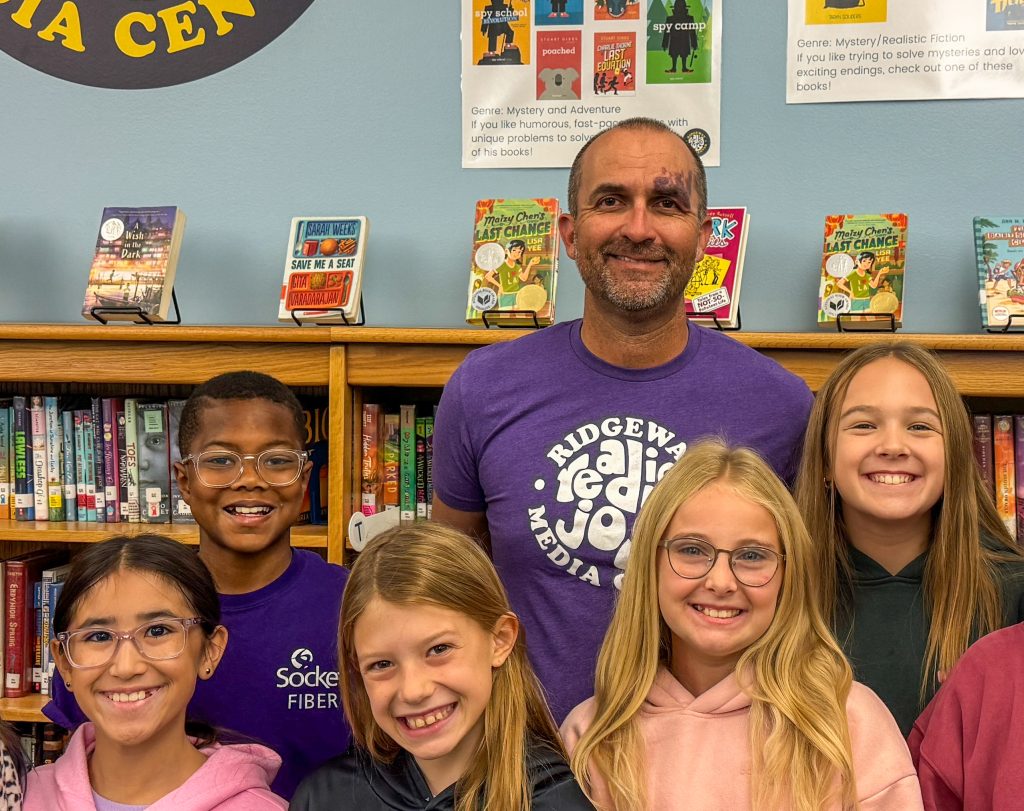
Creating opportunities for students to take ownership of their work is another central part of Villasana’s approach. Inspired by TED Talks and building on CREdX, a program he previously started at Cedar Ridge Elementary, Villasana established Ridgeway Elementary Always Leading, or REALtalk. The annual event gives students an opportunity to share their perspectives with the school community around a selected theme. Last year, students shared stories about people or events that inspired them and made a difference in their lives.
Villasana does not simply put students on stage. He gives them ownership of the event itself. A student committee of fourth- and fifth-graders helps organize and run REALtalk, assisting with everything from promotion and recruiting speakers to auditions, speaker selection, rehearsals and day-of-event operations. REALtalk has grown into a major Ridgeway event, bringing together teachers, administrators, parents and students to celebrate the program.
The event also incorporates service learning. Last year, students selected First Chance for Children as the organization they wanted to support and organized a donation drive that collected more than 1,200 items, including diapers, toys and gently used clothing.
The students are trusted to lead every stage of the process, from planning and preparation to the day of the event. For Villasana, that’s the point. Students aren’t simply participating in an experience created by adults; they’re helping bring it to life.
That same philosophy is evident in another student initiative, Friends of Media Operations, or FOMO. Students involved in the group have independent working time to handle responsibilities such as morning announcements and Curly’s Corner. Each morning, they arrive before school, check the board for their tasks and get to work creating the day’s announcements and completing other responsibilities.
The students have taken ownership of the work, another example of Villasana creating a structure and trusting students to lead within it.
Villasana’s willingness to experiment is supported by the administration at Ridgeway, which he credits with giving him the freedom to try new things.
“They give me the freedom to try new things because they trust my ability to challenge and engage students. When I come to them with an idea, they are almost always supportive and ask what they can do to help make it happen. It’s the same mindset I use when students come to me with ideas.”
This trust has created space for Villasana to continue experimenting, but his approach is not about innovation for the sake of innovation. Each idea starts with a question about what might help students become more engaged, confident or curious. For Villasana, creativity also means being willing to try something without knowing exactly how it will turn out.
Learning through failure and adaptation
Creating something new takes time, planning and effort. When asked what keeps him motivated to continue pursuing new ideas, Villasana quickly returned to the students.
“It’s about seeing what students can do and then helping them go even further. You don’t have to do giant projects either. You can do small things that help students see purpose in what they’re doing.”
The programs Villasana creates are not simply activities for students to complete. They are opportunities to practice persistence, communication, problem-solving, creativity, leadership and adaptability. Tregnago and Brinlee have seen that transformation firsthand.
“Mr. Villasana took the media program from a simple library to an enriching program that engaged the entire school community.”
Villasana’s work at Ridgeway demonstrates that creativity in education does not always require a major program or sweeping change. Sometimes it starts with a simple idea, a willingness to try something different and the belief that students are capable of more when they are given the opportunity to lead.
By creating these opportunities, Villasana is helping students discover not only a love of learning but also the confidence to take ownership of their future.