Story by Riley Rohler
The Leading the Way in Missouri initiative, presented by the Hook Center for Educational Leadership & District Renewal, recognizes educational leaders whose vision, collaboration and commitment are creating meaningful change in Missouri schools and communities. The 2026-27 honorees represent a wide range of leadership roles, each demonstrating the power of partnership and service. Rita Cortés, president of the Kansas City Public Schools Board of Education, is one of four leaders recognized this year for her commitment to effective governance, community engagement and strengthening public education through collaboration and trust.
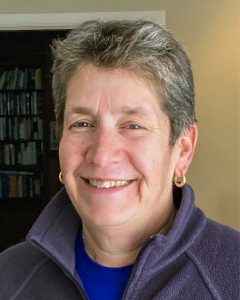
Rita Cortés’ path to becoming president of the Kansas City Public Schools (KCPS) Board of Education is anything but traditional. Having attended private school throughout her education and spent much of her career in the corporate world, Cortés did not initially see herself as a public education advocate. But through her work in the Kansas City community, she became increasingly concerned by what she saw as an “us-and-them” mindset surrounding education and the divisions it created.
For years, Cortés wrestled with the question of how she could help bridge those divides and strengthen the connection between KCPS and the broader civic community. In 2019, she decided to take action and ran for the KCPS Board of Education. She has now served nearly eight years on the board, including almost four years as board president.
Cortés approaches leadership through humility, teamwork and a commitment to servant leadership. Katherine Hairston, associate executive director of leadership development for the Missouri School Boards’ Association, described her approach:
“Rita Cortés is one of the most thoughtful, steady and effective board presidents I have ever had the opportunity to observe. She understands deeply that strong board leadership is not about control, but about keeping the board focused on its governance role, building trust with the superintendent and helping the board work better as a team.”
Building trust through governance
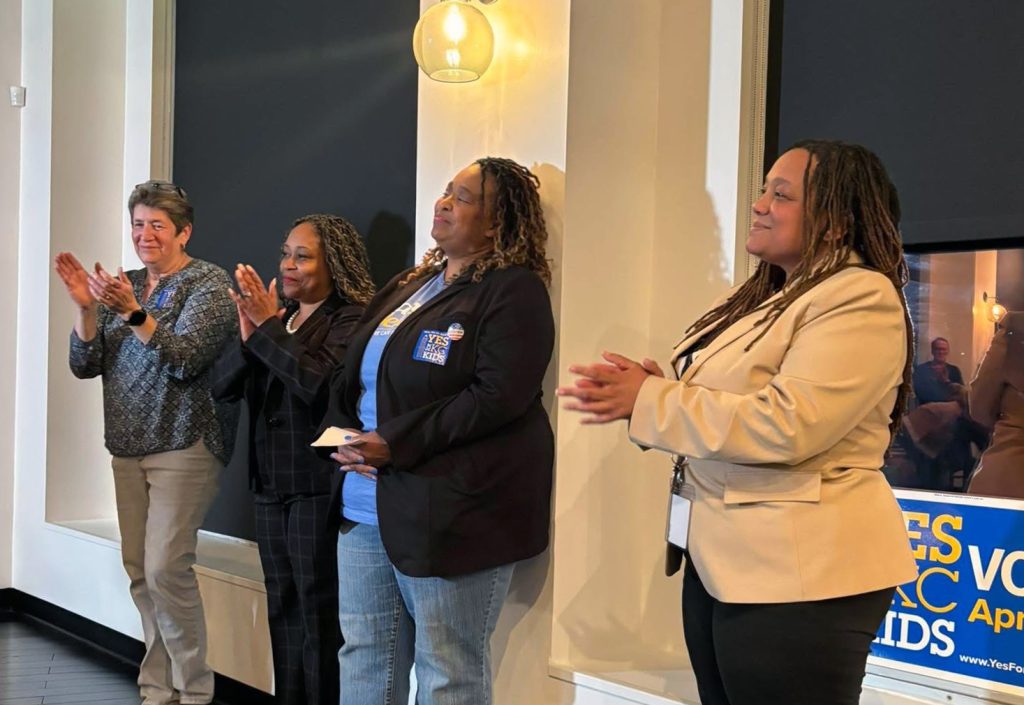
Cortés describes school board governance as a team sport. But teamwork does not happen automatically. It requires trusting relationships among board members, the superintendent and the broader school community.
For Cortés, building those relationships starts with mutual respect and a willingness to ask difficult questions, particularly when there is disagreement or misunderstanding.
“It’s really about developing respect between yourself and the superintendent so that your questions are heard for what they are instead of parsed for what they might or might not be,” Cortés said.
She is intentional about creating time and space with the superintendent to ask substantial questions and understand the reasoning behind decisions. She believes board members need to understand the “why” behind policy objectives so they can serve as informed advocates for the district and answer questions from the community with factual substance.
The process of listening, questioning and developing mutual understanding builds trust not only between the board and superintendent but also with the larger school community.
Hairston has witnessed that approach firsthand.
“Rita supports others through listening, coaching, steady guidance and a deep respect for the people doing the work,” Hairston said. “She intentionally builds relationships with board members, creates opportunities for board learning and encourages the superintendent and board members to spend meaningful one-on-one time together so that trust is in place before difficult issues arise.”
Cortés also views her role as board president as one of supporting the work of the entire board rather than directing it herself.
“The role of a board chair is to stay in the background and make sure the board stays focused on its job and supports colleagues in doing that work,” Cortés said. “At the end of the day, the seven of us are looking into the future and monitoring the present while the superintendent and her team are doing 99.9% of the work, and we should never forget that.”
This perspective has shaped how Cortés approaches some of the district’s most significant initiatives. Rather than viewing leadership as the work of a single individual, she emphasizes the collective effort required to move a school system forward.
Bringing a community together
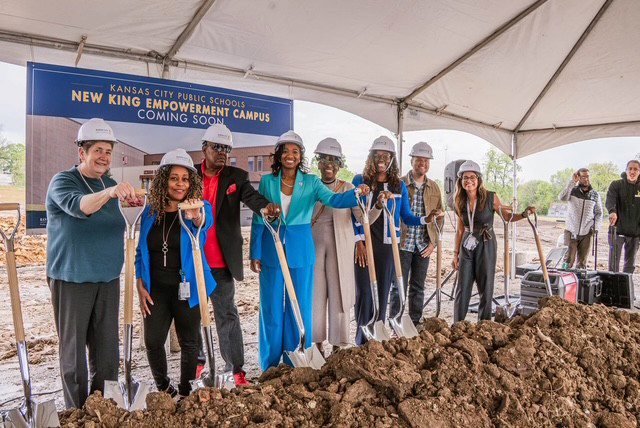
Cortés’ approach to teamwork and leadership was on full display during the historic 2025 bond initiative, when KCPS voters approved a $474 million bond. It was the first bond measure to pass in the district since 1967.
While Cortés is quick to credit the many people involved, the initiative reflects the kind of long-term, relationship-driven work she believes is necessary for meaningful progress.
The bond’s success did not happen overnight. It resulted from a four-year process led by the superintendent and board in partnership, focused on understanding the condition of district buildings, identifying priorities and determining how resources could best serve approximately 15,000 students across a large geographic area.
Cortés attributes the successful passage to the efforts of hundreds of people who helped position the district and community for success. The work began with KCPS regaining full accreditation. From there, the district launched Blueprint 2030, an 18-month strategic planning process that included discussions about educational priorities, building closures, resources and facility investments.
Led by then-interim superintendent Dr. Jennifer Collier, the process involved difficult but necessary conversations with the community and school board. The district then conducted a comprehensive evaluation of every building, identified priorities and developed a plan to improve schools while recognizing that not every need could be addressed at once.
A significant part of the process involved helping the community understand the district’s progress and why the bond was needed.
“That took hundreds of people talking to thousands of people to share the story of where KCPS is today,” Cortés said.
Community outreach took place across Kansas City, from church basements and community centers to living rooms and neighborhood gatherings. Cortés believes these face-to-face interactions were particularly important.
“In the 21st century, you can’t do it only through social media because voters in local elections tend to skew older,” she said. “You can try, but you won’t be successful.”
The effort involved stakeholders throughout the district educating the public about KCPS’s growth, stability and plans for responsible investment. Parents also played a significant role. One group of parents organized independently and went door-to-door throughout the community, helping spread awareness and build support.
The bond itself was structured around a simple goal: every operating school would receive meaningful investment. Initial priorities focused on ensuring every school was warm, safe and dry, including reliable HVAC systems and roofs. Once those needs were addressed, individual schools and communities had opportunities to provide input on how remaining resources would be used.
“Every single school gets investment that the community will not only see and the teachers and students will not only experience, but each community is given the ability to provide input about what that means for them,” Cortés said.
The extensive outreach campaign helped build widespread support for the initiative. The bond ultimately passed with 85% of the vote and exceeded the required threshold in every precinct across the city.
For Cortés, that success reflected years of planning, communication, relationship-building and community involvement.
“Activating all of the community, all of the components of the community, made a big difference,” she said.
A broader responsibility to public education
Cortés’ commitment to public education extends beyond her service on the KCPS Board. She sees strong public schools as a shared civic responsibility and regularly challenges others to consider what is at stake.
When asked what Missourians can do to support public education moving forward, Cortés responded with a question of her own:
“What does our society look like if we don’t educate our kids?”
For Cortés, “our kids” cannot simply mean an individual’s own children. She encourages people to consider the broader consequences when students do not receive the education they need to participate fully in society.
“The cost of having a meaningful portion of our community not able to read well, not able to understand what they’re reading, not able to be an active participant, not able to believe they can become what they choose to be in life — all of those things have consequences, and we kind of pretend those consequences don’t exist,” Cortés said.
That perspective reflects the same philosophy that guides her work as a board leader. Whether she is working through difficult questions with the superintendent, helping board members build trust, engaging community members in district initiatives or thinking about the future of public education, she continually returns to the importance of relationships and shared responsibility.
Cortés may not have followed a traditional path into public education, but her experience has given her a unique perspective that she brings intentionally to school board leadership. She leads by listening, asking questions, building trust and creating opportunities for others to contribute.
And while she has helped guide some of KCPS’s most significant recent accomplishments, she continues to view leadership as a collective effort. Effective governance, in her view, is not about having all the answers or being the person in the spotlight. It is about bringing people together, keeping the focus on student growth and achievement and ensuring everyone has a role in moving the community forward.