FY2026
Research Report
FY2026
At a glance
188
Active grants
112
Active researchers
$106 million
Total anticipated
71
Principal investigators with 148 proposals submitted
25
Junior faculty with 46 proposals submitted
$95.9 million
Total submitted
Research Performance Across Campus
- Medicine $85.3 million
- Ag, Food and Natural Resources $67.8 million
- Engineering $33.7 million
- Arts & Science $29.7 million
- Education & Human Development $21.9 million
- Veterinary Medicine $18.1 million
- Health Sciences $10.3 million
- Nursing $3.1 million
- Journalism $1.4 million
- Business $85,812
FY2022-2026
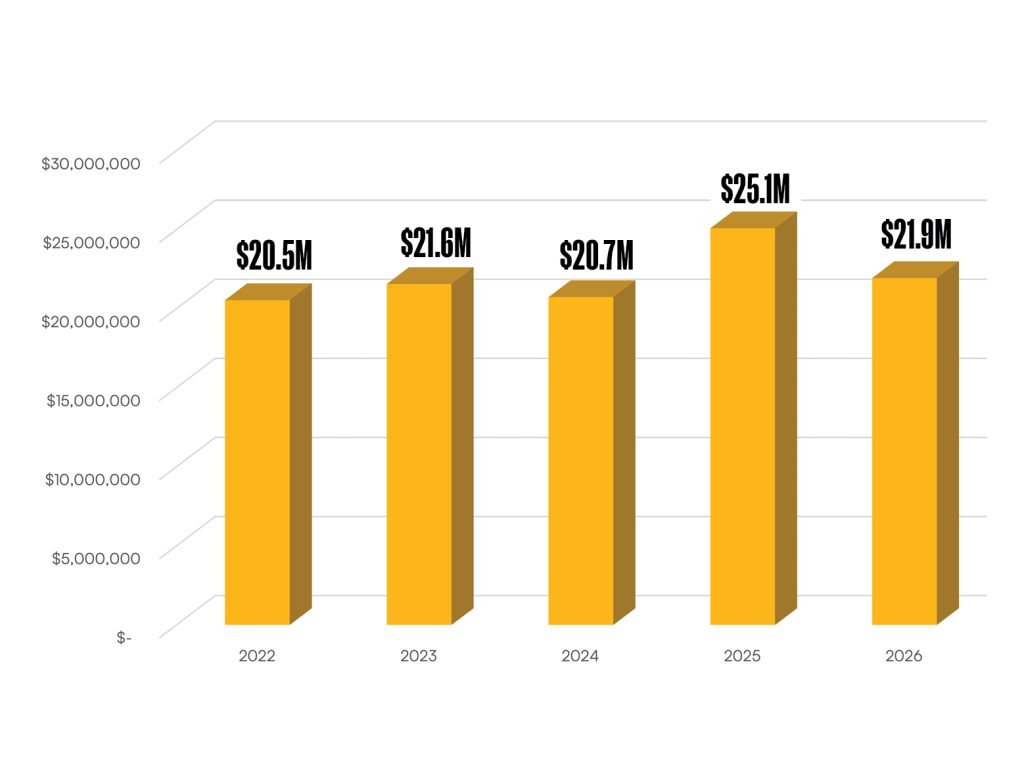
Grant Expenditures - Research
Academic department research grant expenditures in the College of Education & Human Development. MU Key Metrics data is reported by Shared Credit CSD (college/school/division) and AAU Contribution (Phase I, Phase II).
- 2022: $20.5 million
- 2023: $21.6 million
- 2024: $20.7 million
- 2025: $25.1 million
- 2026: $21.9 million
FY2022-2026
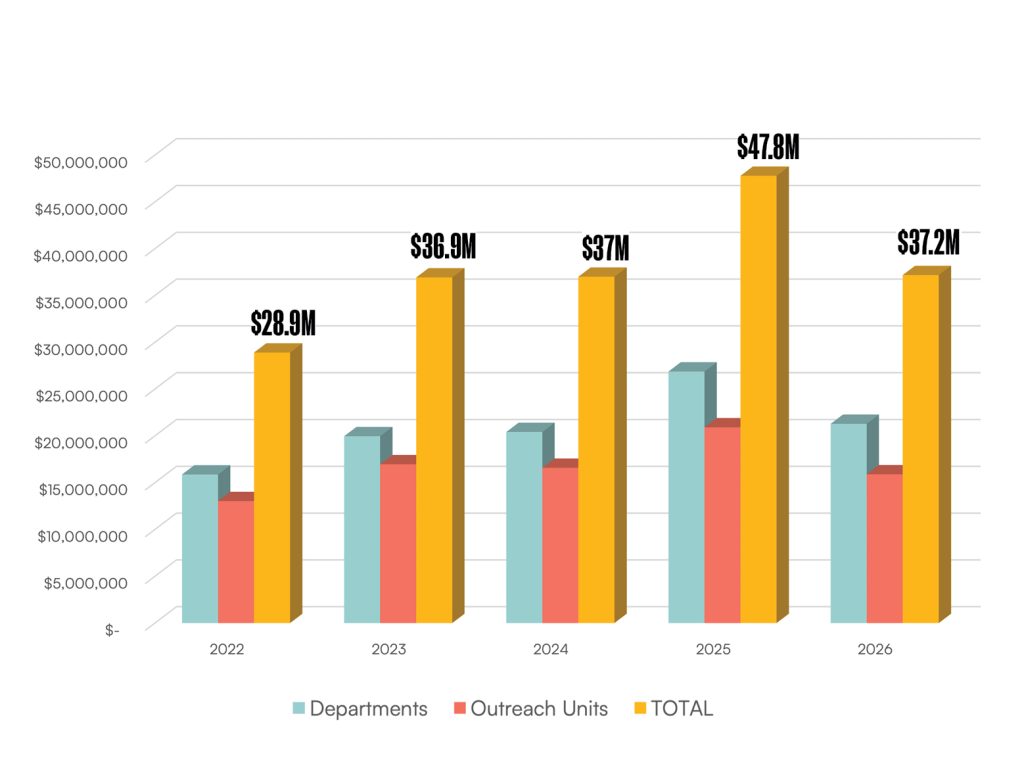
Grant Expenditures - All Purpose
Research grant expenditures in the College of Education & Human Development, including academic departments and outreach units. MU Key Metrics data is reported by Shared Credit CSD (college/school/division). All purposes include Research, Instruction, & Other Sponsored Activity.
- 2022: Departments $15.9 million; Outreach units $13 million; Total $28.9 million
- 2023: Departments $20 million; Outreach units $17 million; Total $36.9 million
- 2024: Departments $20.4 million; Outreach units $16.6 million; Total $37 million
- 2025: Departments $26.9 million; Outreach units $20.9 million; Total $47.8 million
- 2026: Departments $21.3 million; Outreach units $15.9 million; Total $37.2 million
Awards by sponsor
$21.1 million
Department of Education

$1.1 Million
Missouri Department of Elementary & Secondary Education

$392,554
National Science Foundation
$2.1 million
Department of Health & Human Services

$170,671
Other Federal Funding

$1.8 million
Foundations & Other Agencies

$189,459
Other Funding Sources
Connecting Our Research Community
During FY2026, the Office of Research Support advanced a variety of initiatives designed to strengthen research capacity, foster collaboration and support research excellence across the College of Education & Human Development. Through communications, professional development opportunities, partnerships and research support services, the office helped connect researchers with resources, collaborators and opportunities that contributed to a thriving research community.
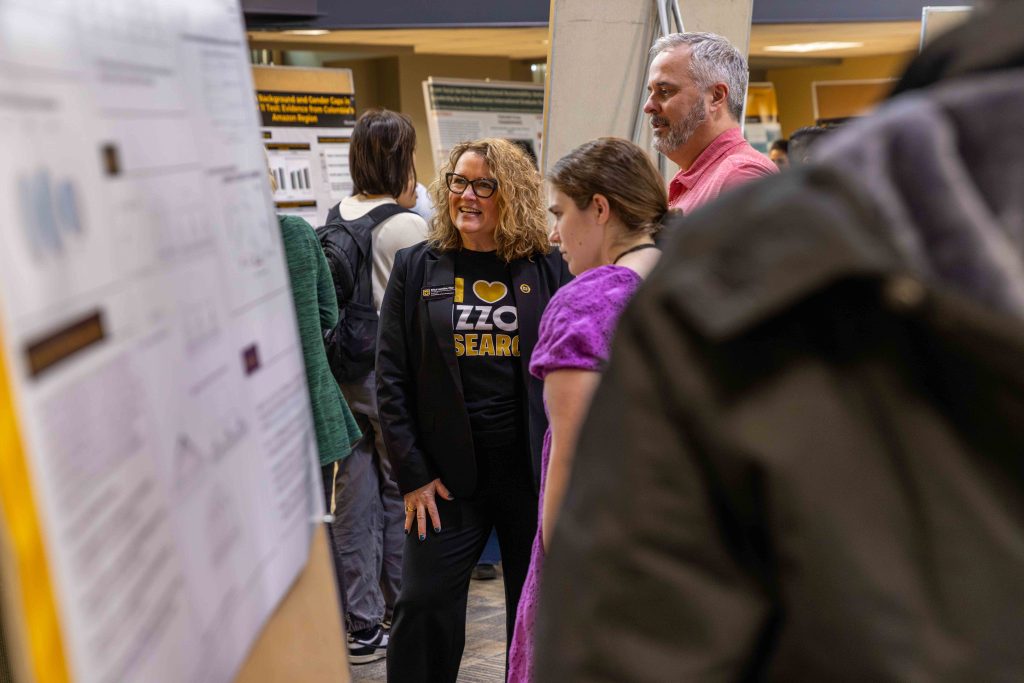
Communications & Visibility
The Office of Research Support promotes awareness of research activity across the college through monthly research newsletters, monthly reports for department chairs and college leadership, and ongoing communication initiatives such as Researchers@Work, Research Impact and New Research Funding. Researchers also have access to the Research Support SharePoint site, which serves as a central hub for proposal development, grant administration and other research resources.
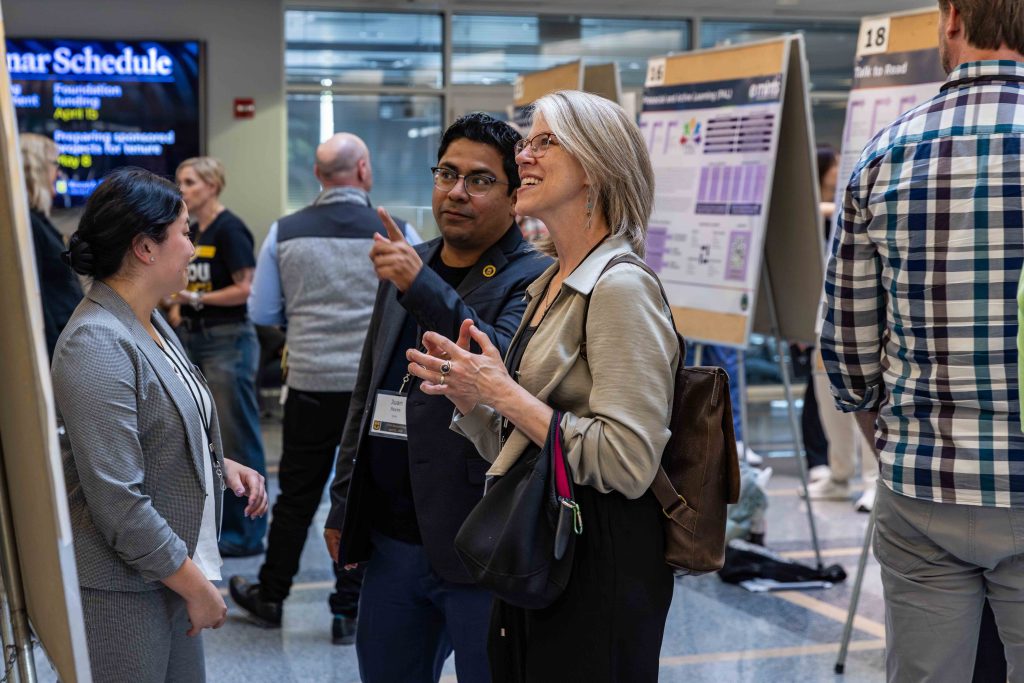
Engagement & Community
Building a strong research culture is a key priority of the Office of Research Support. Throughout the year, the office fosters engagement through Lunch & Learn events, the Early-Career Scholars Program, departmental meetings, the College of Education & Human Development Research Day and the Graduate Student Research Symposium. The office also collaborates regularly with associate deans for research and research development colleagues across campus to strengthen connections and share best practices.
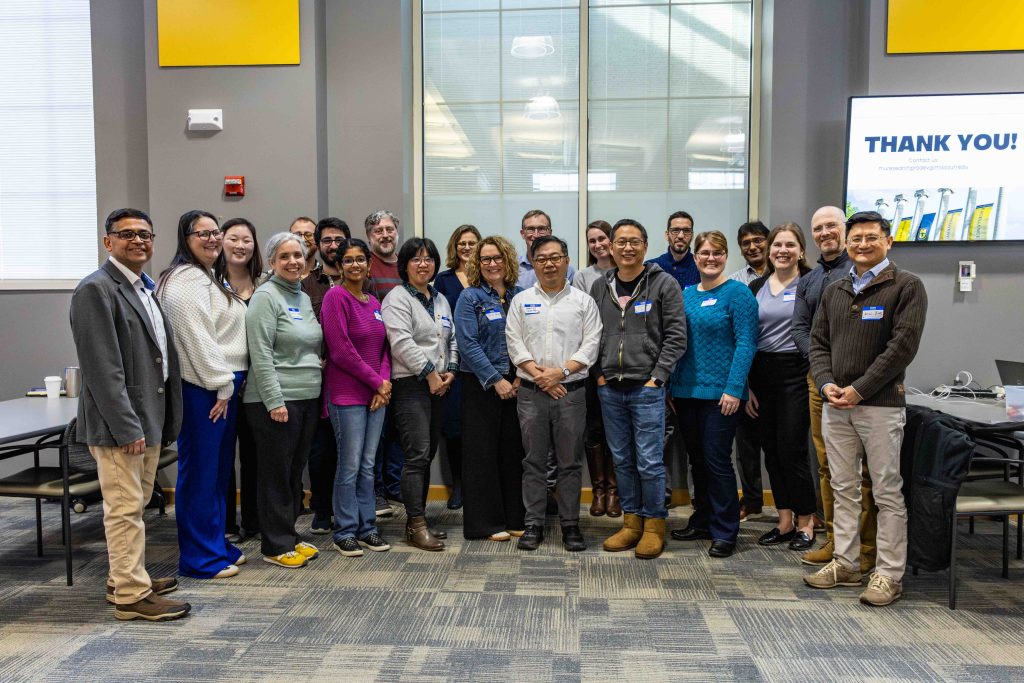
Collaboration & Partnerships
The Office of Research Support helps build meaningful partnerships that expand opportunities for research and scholarship. Efforts include supporting Edu-neering collaborations, facilitating the Columbia Public Schools Faculty Meet & Greet and working alongside Campus Foundation Relations to support foundation proposal development. These partnerships help connect researchers with new collaborators, funding opportunities and community partners.
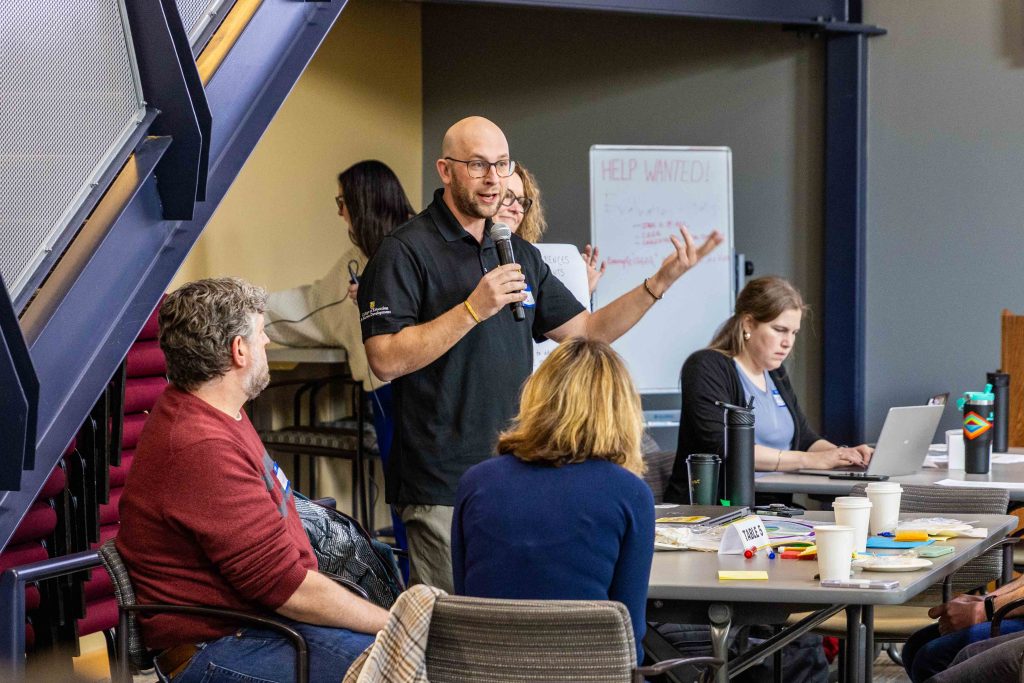
Development & Award Support
From proposal development to project launch, the Office of Research Support provides resources that help researchers succeed. The office facilitates new grant award kick-off meetings to support effective project implementation and provides guidance for Columbia Public Schools research applications, helping researchers navigate approval processes and strengthen partnerships with school districts.