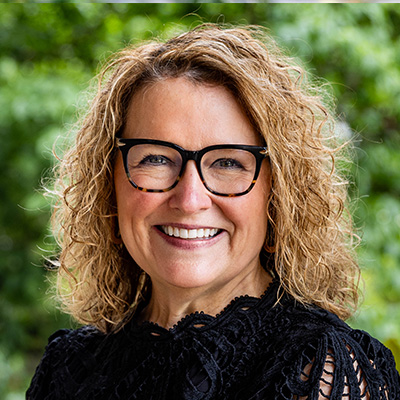
The Lembke Research Group conducts research that helps educators make informed instructional decisions and improve outcomes for students with academic and learning challenges. Led by Dr. Erica Lembke, the group focuses on data-based instruction, assessment, progress monitoring and evidence-based interventions in reading, writing and mathematics. Through federally funded research projects and partnerships with schools, the group develops practical tools and strategies that support educators while improving learning opportunities for students.
The group’s work spans a range of initiatives designed to strengthen instruction and support student success, from developing reliable assessment systems to creating and evaluating interventions for students who need additional academic support. Working closely with teachers, schools and community partners, researchers translate findings into resources and professional learning opportunities that can be implemented in real-world educational settings. Undergraduate and graduate students also have opportunities to engage in meaningful research experiences that contribute to improving outcomes for learners across Missouri and beyond.
Scalability, Capacity, and Learning Engagement for Fractions (SCALE)
Funder: U.S. Department of Education
Principal Investigators: Leanne Ketterlin Geller (Southern Methodist University), Erica Lembke (University of Missouri), Sarah Powell (University of Texas at Austin)
SCALE Fractions is a research study of Fraction Face-Off (FFO), a What Works Clearinghouse approved intervention program designed by Dr. Lynn Fuchs at Vanderbilt University, for small groups of students in Grades 4-8 who are experiencing math difficulty. FFO includes 36 sessions divided into a 12-week implementation schedule, with 3 sessions per week, each lasting about 30-35 minutes. The intervention uses components of explicit instruction to address two types of understanding about fractions: the part-whole interpretation and the measurement interpretation of fractions. Each FFO session consists of 5 activities: (1) Training, (2) The Relay, (3) Fraction Sprint, (4) Individual Contest, and (5) Scoreboard.

Data-Based Instruction–Tools, Learning and Collaborative Support (DBI-TLC)
Data-Based Instruction–Tools, Learning and Collaborative Support (DBI-TLC) is a $1.5 million professional development project funded by the Institute of Education Sciences within the U.S. Department of Education. The project helps teachers use data-based instructional decision-making to better support students with intensive learning needs, particularly in early writing. Through school partnerships, professional learning and research-based tools, DBI-TLC strengthens teachers’ ability to individualize instruction, improve student outcomes and increase achievement through effective, data-informed practices.
Integrated MTSS Fidelity Rubric (IMFR)
Integrated MTSS Fidelity Rubric (IMFR) is a research-based tool that helps schools assess and strengthen their implementation of integrated Multi-Tiered Systems of Support (MTSS). Through structured interviews and data analysis, the IMFR evaluates key areas including instruction, assessment, data-based decision-making and infrastructure. Funded by a five-year, $4 million grant from the Institute of Education Sciences, the project is a partnership between the American Institutes for Research and the University of Missouri that supports continuous school improvement through actionable feedback and resources.
Leaders Investigating Mathematics Evidence (LIME)
Leaders Investigating Mathematics Evidence (LIME) prepares doctoral scholars to become leaders in special education and mathematics education research. Through collaboration among the University of Texas at Austin, Southern Methodist University and the University of Missouri, LIME scholars deepen their expertise in higher education, special education instruction and assessment, and mathematics content and pedagogy. Graduates go on to faculty and leadership positions where they support teacher development, conduct research and improve mathematics outcomes for students with learning disabilities.
Funder: The U.S. Department of Education Office of Special Education Programs awarded $3.6 million to support this collaborative initiative.
Supporting Teaching of Algebra: Individual Readiness (STAIR 2.0)
Supporting Teaching of Algebra: Individual Readiness (STAIR 2.0) helps special education teachers strengthen mathematics instruction for middle school students with learning disabilities. Through professional development, coaching and data-based individualization (DBI), the project supports educators in using assessment data and evidence-based practices to improve algebra instruction and help students build stronger mathematical reasoning skills.
The Early Writing Project
The Early Writing Project supports teachers in helping young learners develop strong writing skills through data-based instruction. By providing research-based assessment tools, instructional resources, professional learning and coaching, the project helps educators identify student needs, make informed instructional decisions and improve writing outcomes for students with intensive writing support needs. Learn more at https://earlywritingproject.org/.
