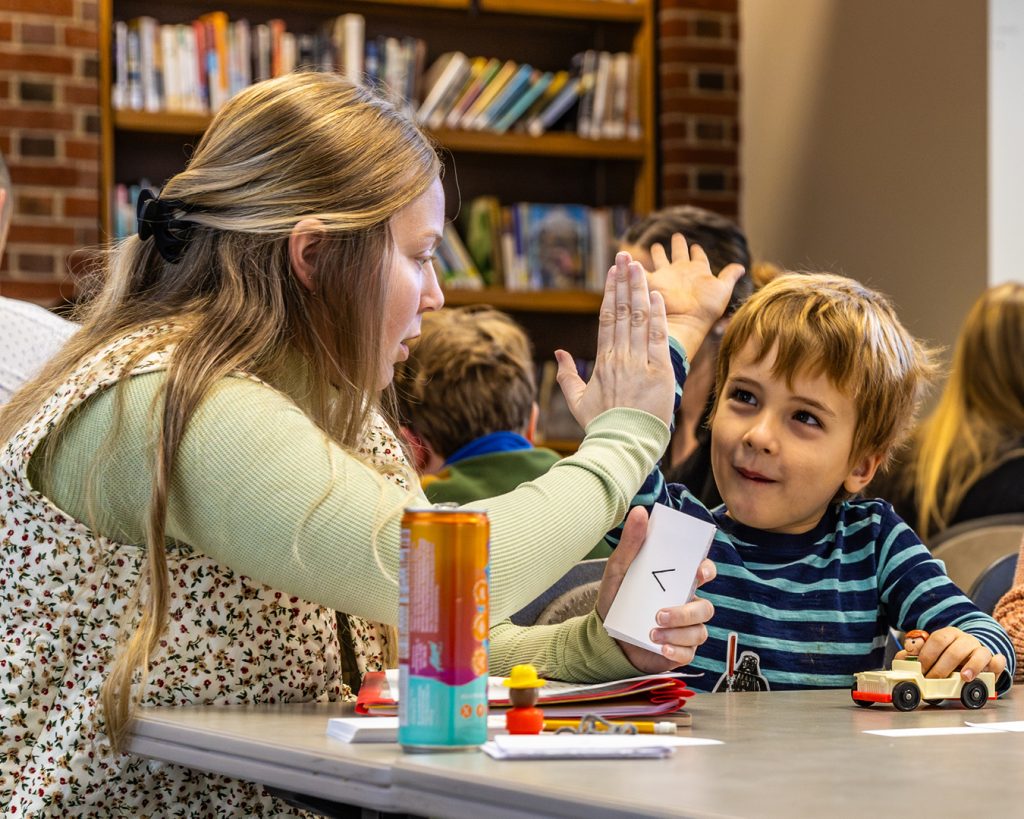
Tiger Reading Buddies: building literacy, confidence and community at Mizzou
Story and photos by Morgan Solomon
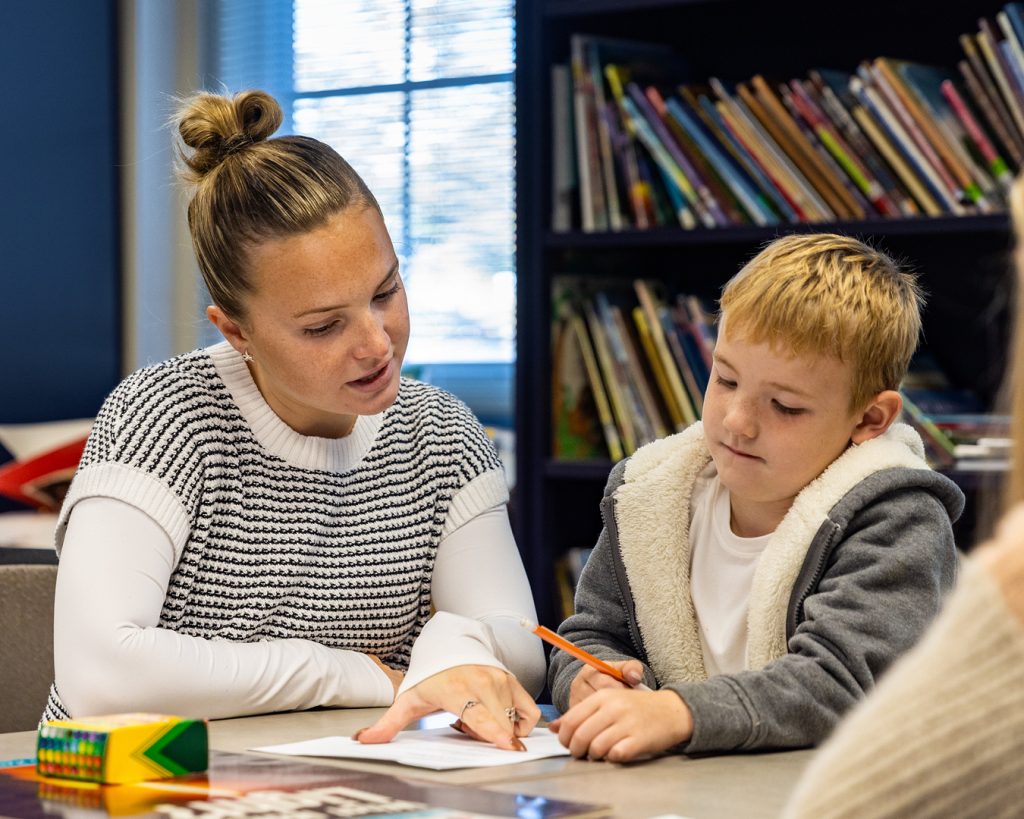
When juniors at Mizzou step into the Tiger Reading Buddies classroom, they’re not just learning about literacy. They’re living it.
The program, part of LTC 4211 Literacy Assessment and Development, pairs future teachers with local children for hands-on reading activities. For Nicole Bliven, course instructor and program leader, it’s all about giving students authentic experiences that build confidence and skills.
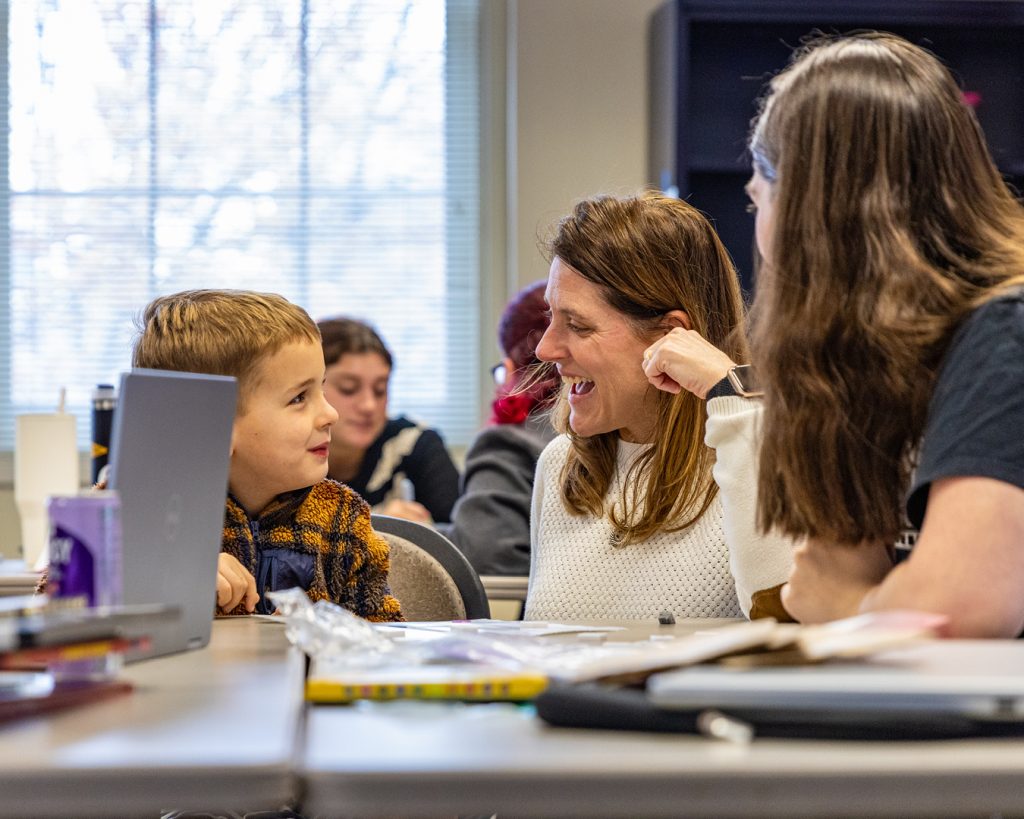
“Tiger Reading Buddies is practice-based,” Bliven explains. “Mizzou students aren’t just reading about strategies. They’re creating lessons, observing kids and adjusting on the fly. It’s exactly what they’ll do as teachers in their own classrooms one day.”
Two course sections of the program host homeschool families on campus, while others work in field placements across Columbia. Mizzou students greet families, explain activities and interact with parents. These are real-world interactions that go beyond the textbook to shape their teaching practice.
Bliven says the program centers on three core ideas: giving students autonomy, grounding learning in practice and developing strong kid-watching skills.
“Kid-watching means paying attention to everything—what’s on the page as well as the nonverbals,” she says. “If a child needs a break, students learn to notice and respond. That’s something you can’t teach from a book.”
Those moments of insight often lead to creative decisions. When two Mizzou students noticed their buddy struggling with the word gym, they turned it into a mini lesson on word patterns, connecting new vocabulary to familiar ideas. Another pair designed a 20-minute music and movement routine for a non-verbal child with Down syndrome. The child lit up, and the routine became a highlight of their sessions.
“We want students to take ownership,” Bliven says. “Seeing them design something meaningful and run with it shows they’re thinking like teachers.”
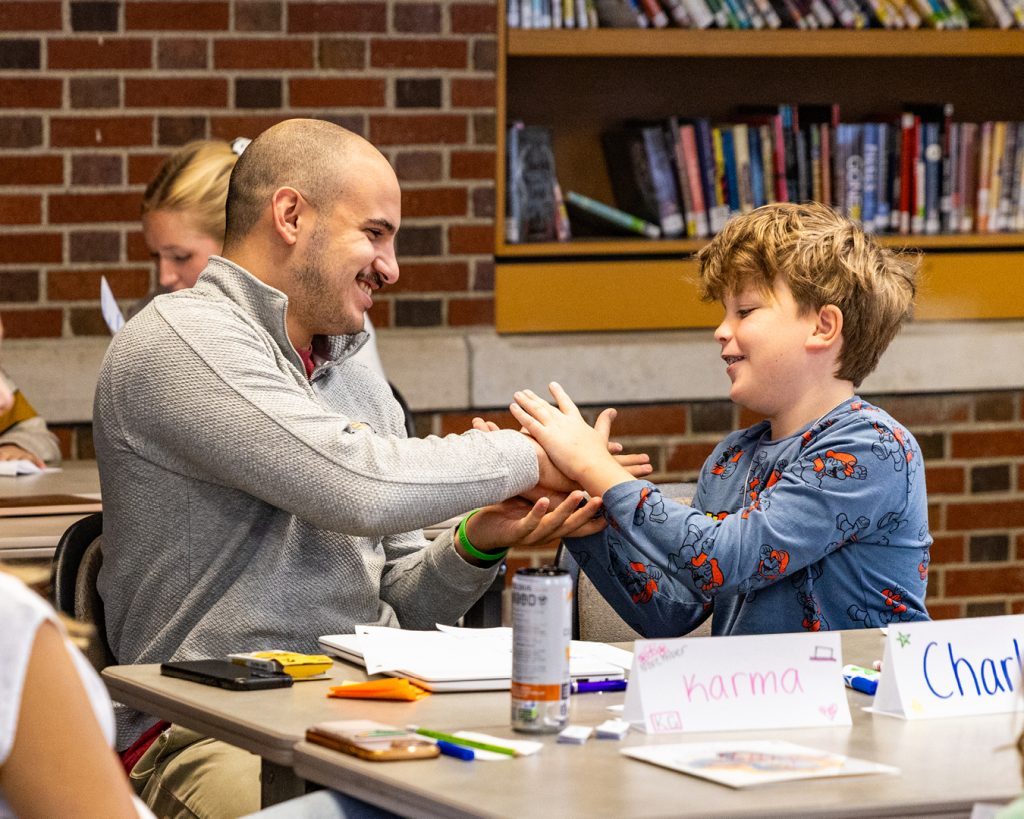
For the young readers who participate, the goal is simple: create a positive experience with literacy. That can mean enjoying a story, playing with sounds, or building confidence with letters and words. For the MU students who lead the work, the outcomes often feel even bigger.
“They walk in unsure,” Bliven says. “By the end, they see themselves as reading teachers.”
Bliven hopes the program will continue to grow through new community partnerships and expanded outreach. “We want families to feel welcome on campus,” she says. “When children, parents, and college students learn together, it builds skills and community. That’s powerful.”