Mizzou researchers use AI to boost literacy
A $10 million federal grant expands efforts to close reading and writing gaps in rural Missouri classrooms.

By Sarah Diedrich | Show Me Mizzou
At the University of Missouri, researchers are using artificial intelligence to help teachers close childhood literacy gaps and empower elementary students who struggle with reading and writing, particularly in rural parts of Missouri.
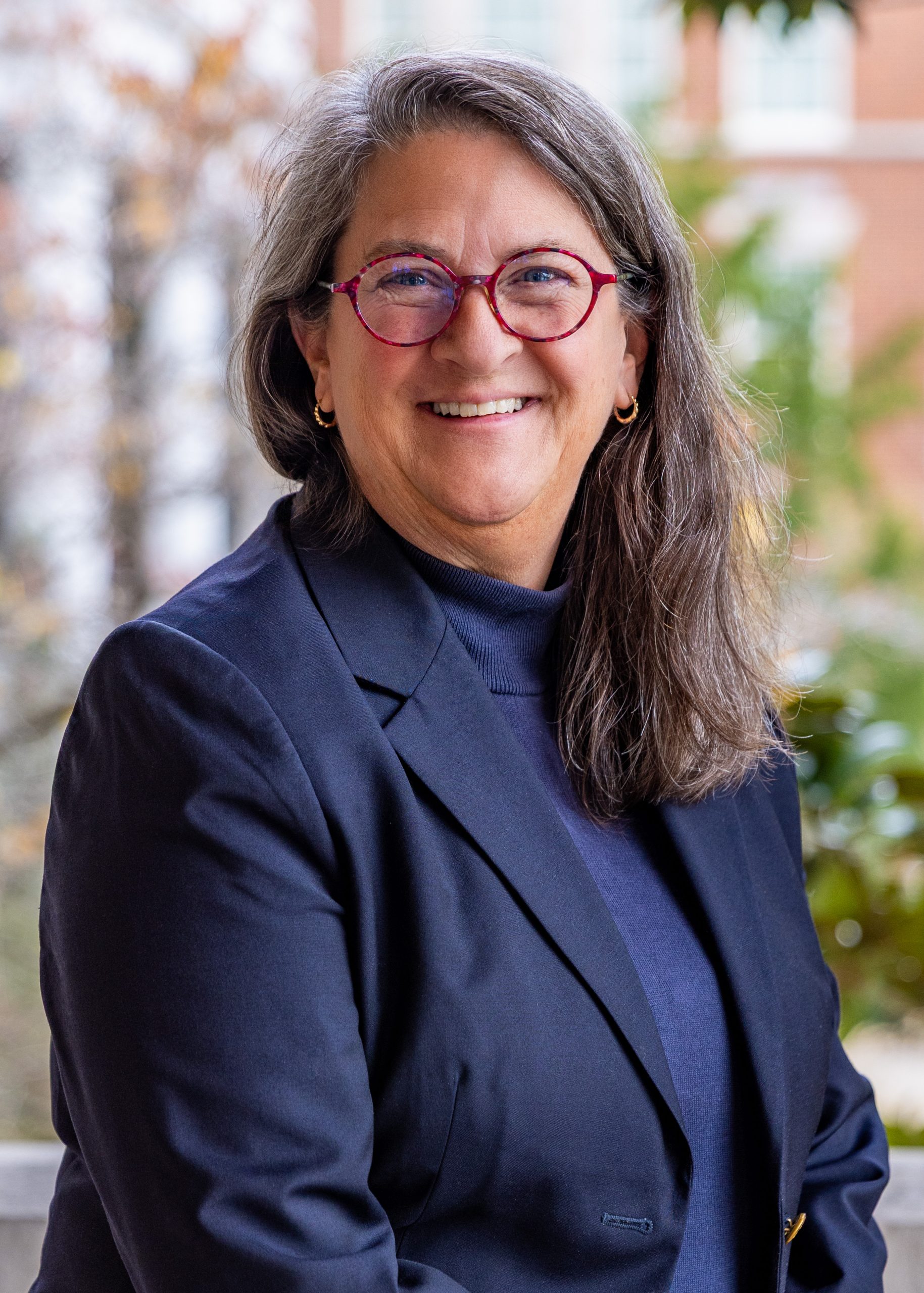
Betsy Baker, a professor in Mizzou’s College of Education and Human Development, has received a $10 million grant from the U.S. Department of Education — one of just 24 literacy projects selected nationwide — to implement a new set of strategies called Amplify Literacy Learning, positioning Mizzou as a national leader in addressing literacy disparities. Designed for fourth- and fifth-grade classrooms, Amplify helps teachers harness generative technologies to support students as they develop and strengthen reading and writing skills.
The new initiative, which is in cooperation with MU Partnership for Education Renewal, build’s on Baker’s earlier work through Talk to Read, a $4 million federally funded literacy program now in its fifth year. The program uses speech-recognition technology (similar to Siri or Alexa) to allow second- and third-grade students to speak into a tablet and see their words appear in real time. By connecting spoken language to written text, Talk to Read boosts reading skills by grounding instruction in students’ own words and experiences.
“With Amplify, we’ll apply many of the same approaches using generative AI, helping fourth- and fifth- grade students learn how to brainstorm, draft, edit and revise their writing with AI as a support,” Baker said. “By eliciting learners’ own words to write their own reading materials, teachers can explicitly teach reading skills within the context of each learner’s words, language and experiences. This is not merely a writing project but a literacy — reading and writing — project.”
The same approach will be used with Amplify, delivered in partnership with Kansas City Audio-Visual and Swivl, companies focused on improving classroom technology. Fourth- and fifth-grade students will use generative AI to brainstorm ideas, experiment with story formats, and edit and revise their drafts.
“At the same time, we’ll help teachers see how AI can alleviate some of the workload, not by replacing instruction, but by reducing the burden of grading endless papers or generating ideas from scratch,” Baker said.
Instead, teachers would guide students to use AI as a writing partner, empowering them to create their own materials rooted in their own words and lived experiences.
“In many ways, it’s a fourth- and fifth-grade version of dictation, using AI to help students become authors of texts they can truly read, understand and own,” Baker said.
Over the next five years, researchers hope to recruit more than 240 fourth- and fifth-grade teachers from 80 predominantly rural school districts across Missouri to implement the Amplify Literacy Learning strategies, potentially affecting about 6,000 students. The initiative will begin this fall with a pilot program. Baker’s research team from the College of Education and Human Development includes Amanda Olsen, associate professor; Kirsten Musetti Tivaringe, assistant teaching professor; Sam von Gillern, assistant professor; and Christi Bergin, professor emerita.
The essence
While most literacy programs emphasize explicit instruction, the essence of Talk to Read and Amplify Literacy Learning is also based on a key learning principle that literacy learning is highly contextualized.
“They show it, they teach it and they practice it,” Baker said. “It’s very explicit.”
That contextualization sets Baker’s strategies apart.
“What makes these programs unique is that students start with their own language — their own words — and learn to apply their skills in ways that connect directly to their experiences,” she said. “From there, they can transfer these skills to new and unfamiliar school texts. Too often in schools, we skip this crucial bridge between what students already know and what we want to teach. Instead, we jump straight to ‘here’s something you don’t know,’ which can leave students frustrated because they don’t have a framework to make sense of it.”
Baker said some students navigate this transition naturally. Many others, however, need more support to build that bridge.
Enhancing current instruction
Amplify Literacy Learning is designed to enhance research-based literacy programs already used in Missouri schools, making them more effective rather than replacing them.
“We’re not trying to impose a program,” Baker said. “We’re asking for feedback on opportunities to strengthen literacy learning. If teachers and students find this approach useful, the federal government may ask us to share it more broadly.”
Baker emphasized that researchers want input from participating teachers, administrators and students on how well Amplify Literacy Learning’s strategies work in real classrooms. While the evaluation centers on the approach itself — not on teacher, school or student performance — she is confident in its promise.
“Our goal is to serve as a free resource for districts and provide expert support,” she said. “This is an evaluation of the strategies, not a judgement of classroom practice. Existing research suggests they have strong potential to improve literacy learning.”
This story originally appeared on Show Me Mizzou.
Want more stories like this? Subscribe to the Show Me Mizzou newsletter.