Research that serves our communities
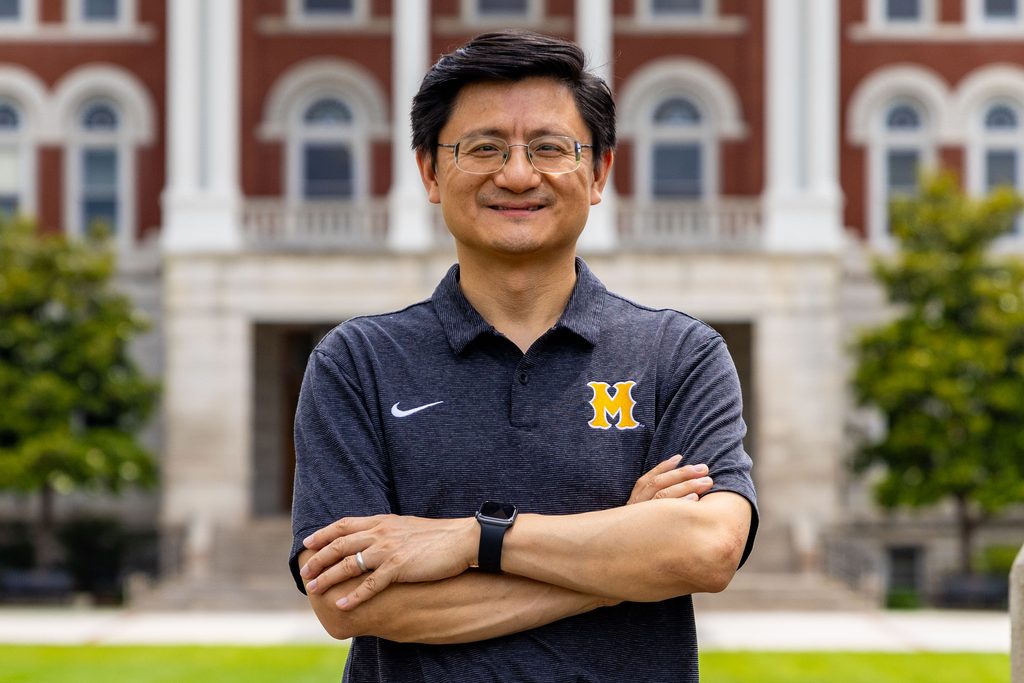
Story by Kui Xie
Photo by Morgan Solomon
One of the things that makes the College of Education & Human Development extraordinary is the way we bring our scholarship and research beyond the university and into the communities we serve.
For decades, our faculty, staff and students have partnered with schools, educators, caregivers, families, libraries, agencies and communities across Missouri to turn knowledge into action. We do this on a scale that I have rarely seen in other colleges of education and human development. In fact, I believe CEHD is a national leader in community engagement —and, importantly, we are doing this work well.
Through our federally funded educational research and programs alone, our FY25 active grants have reached nearly 38,000 teachers and more than 142,000 students, engaged 209 Missouri school districts and provided nearly 28,000 hours of professional learning for educators. We have also helped put more than $1.3 million in classroom materials and technology directly into schools and classrooms. Our work extends beyond education to support children and families, libraries, communities, and organizations.
These numbers represent much more than the reach of our grants. They represent relationships—with teachers who are strengthening their practice, students who are gaining new opportunities to learn, children and families whose well-being we are working to improve, libraries connecting people with knowledge and resources, schools working to address complex challenges and communities investing in their futures.
But I believe we can do even more.
This new academic year 2026-27, I want us to build on that strength by making translational research a theme for our college. To me, translational research is not simply about taking what we discover and putting it into practice. It is a two-way process: using research to inform practice while also learning from practice to identify the problems, questions, and opportunities that should shape our research. At its best, translational research creates a continuous connection between scholarship and the people and communities we serve. That means continuing to build strong partnerships with organizations such as the Missouri Department of Elementary and Secondary Education (DESE), school districts, local libraries, childcare centers, and other state, community, and industry partners. It means listening carefully to what our partners need, learning from their experiences and challenges, asking research questions that matter to them, and working together to develop solutions that are grounded in evidence and responsive to the realities of their communities.
I encourage faculty and staff who are not already doing so to consider how you can study, document and share the impact of your community-engaged work. The work happening across our college is important not only because of what it does for the communities we serve, but also because of what it can teach the broader field of education and human development. We have an opportunity to generate new knowledge about what effective community engagement looks like at scale, and to establish CEHD as a national model for connecting research, practice and public impact.
As we envision our future, I hope we will think boldly about this part of our identity. Our scholarship should not simply reside in journals or on our campus. It should reach classrooms and schools, families and libraries, organizations and communities. At the same time, the challenges, innovations, and knowledge that emerge from those settings should shape the questions we ask and the research we pursue.
We have been doing this work for many years. Now, let us be even more intentional about understanding it, strengthening it and expanding its reach. Throughout this year, I hope we will explore together what translational research can mean for CEHD and how we can make it an even stronger part of who we are.
Our mission calls us to serve. Our research gives us the opportunity to make that service transformative.