Connecting the dots: How Mizzou mentors shaped Andrew Lootens-White’s journey
Story by Sarah Salmons
Photos by Morgan Solomon
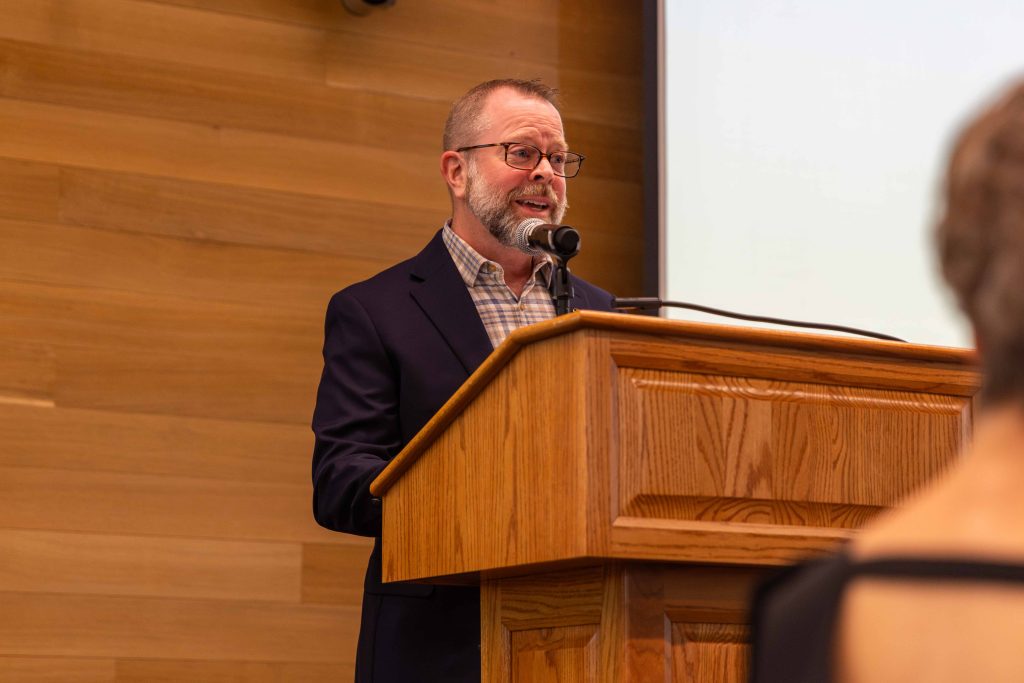
From a small Northwest Missouri town to a national higher education leadership role, the CEHD alumnus credits the people who helped him see possibilities he hadn’t imagined — and now hopes to do the same for others.
When Andrew Lootens-White stepped onto the University of Missouri campus in 1987 between his sophomore and junior years in high school, he was a small-town kid from Tarkio, Missouri, with a love of learning and a curiosity about what lay beyond his hometown. What he found at Mizzou was more than an education. He found people who recognized his potential, opened doors and helped him connect experiences that would shape his future.
Encouraged by his high school teachers to apply, Lootens-White attended the Missouri Scholars Academy, a summer program for academically gifted high school students. He remembers the energy of campus, the excitement of exploring new ideas and even sneaking into a concert at Jesse Hall — his first concert ever.
“I was surrounded by movers and shakers and felt like I belonged,” he said. “It was okay to just be me.”
That sense of belonging stayed with him. He returned to the Missouri Scholars Academy as a college student, serving as a resident assistant, and later, as an instructor. Today, he still serves on its applicant review committee, helping identify students who might benefit from the same transformative experience.
“It totally changed my life. I saw possibilities I didn’t even know about,” he said of his time at Mizzou.
A handoff from one opportunity to the next
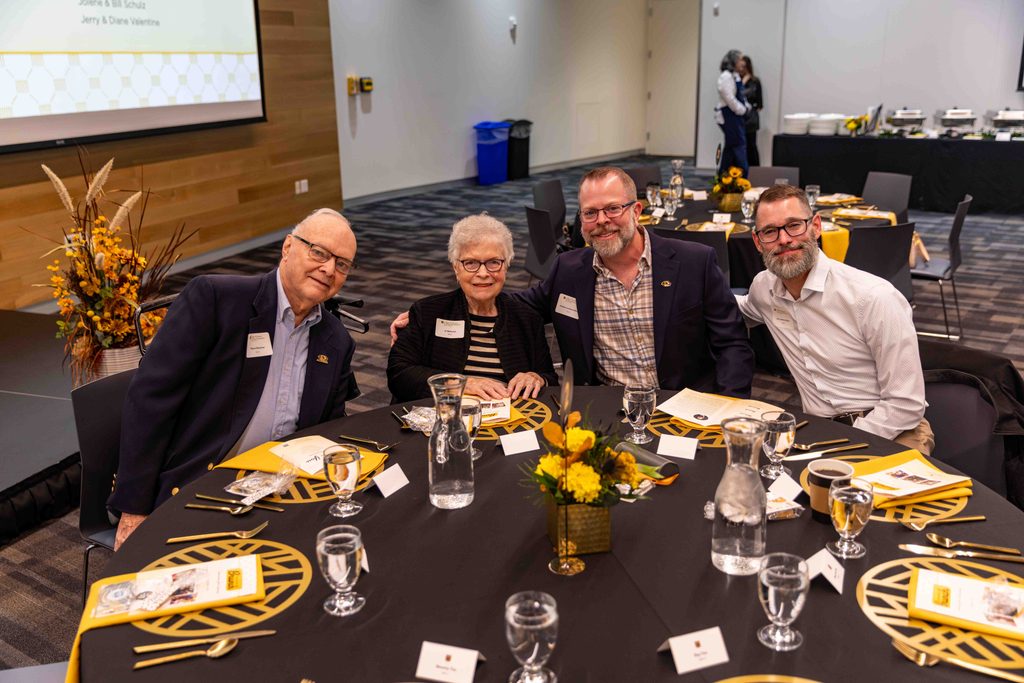
Lootens-White earned three degrees from the College of Education & Human Development (CEHD): a bachelor’s and master’s degree in secondary education and a Ph.D. in instructional theory and practice. Along the way, faculty and staff helped him recognize opportunities and develop skills he would draw on throughout his career.
Jo Behymer, who was Assistant Dean of the College at the time, encouraged Lootens-White to persevere after a rough first semester that led him to change his original college major to one in education.
Supportive staff members Sonya Nistendirk and Pat Wehmeyer, who worked in the college’s dean’s office, told him about a scholarship for future teachers that made a meaningful difference as he pursued his education. His academic adviser, Roy Fox, guided him through his undergraduate and master’s programs, helping him discover the power of writing to work through complex ideas.
“I learned from Roy that I could figure things out through writing,” Lootens-White said.
Other mentors helped connect his campus experiences to opportunities beyond Mizzou. Mike Pullis, while serving a one-year faculty fellowship at the Missouri Department of Higher Education, helped Lootens-White navigate the bureaucracies of a state agency and be successful in a position he had there.
“There was a continual handoff across the college from one experience to another,” Lootens-White said. “One person after another supported me and guided me.”
As a student, Lootens-White explored the intersection of education, technology and innovation. He worked as an undergraduate in a grant-funded office supporting competency-based education programs across Missouri and later while working for Mizzou’s Campus Writing Program developed a course called “Expressive Media,” in which students used emerging technologies to create multimedia compositions.
Those experiences helped lay the foundation for a career that would take him from Mizzou to state higher education policy and, ultimately, national higher education leadership.
Lootens-White joined the Missouri Department of Higher Education in 1999. He then returned to Mizzou and served as director of educational technology until 2007 when he began working at the Higher Learning Commission, where he now serves as vice president of accreditation relations, working with colleges and universities across the country.
Lessons from the classroom continued to prove valuable. One of his favorite courses at Mizzou was Innovation Theory with John Wedman. He later applied what he learned to help lead the commission’s transition from paper-based processes to an electronic system for accreditation documentation and review.
“It is so meaningful that after all this time, even decades later, I use the knowledge and skills I learned in my academic programs and student jobs,” he said.
Opening doors for the next generation
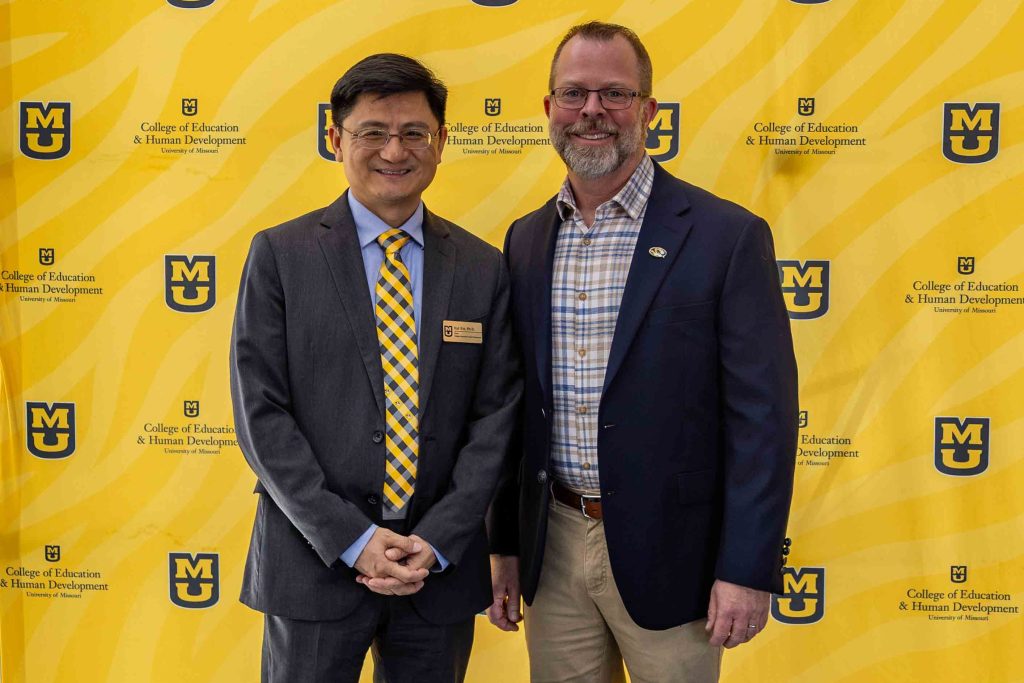
Lootens-White’s connection to CEHD remains strong. He recently shared his expertise in higher education accreditation with students in an educational leadership course and serves on the college’s strategic planning task force.
He and his husband of 30 years, Jim, also a Mizzou alumnus, are extending that commitment through philanthropy. The couple has chosen to support future teachers in the college through their estate plans, investing in opportunities for students they may never meet.
They also look for ways to make a difference in students’ lives today. When Lillie Harvey, a friend of the family and sophomore from Craig, Missouri, transferred to Mizzou from Appalachian State University to be closer to family, Lootens-White helped her find a student employment opportunity in Jim’s office. The position gives Harvey firsthand experience connected to her studies in finance and business.
For Lootens-White, it is a familiar pattern: a connection that opens a door and helps someone discover what might be possible.
“I hope I can better recognize how I can help others connect the dots,” he said.
His journey is a reminder that a career rarely follows a straight line.
The impact of an education extends far beyond a degree. It lives on in the skills students carry forward, the confidence to tackle unfamiliar challenges and the opportunities they create for the next generation.