STEM Cubs sparks curiosity — and creates tomorrow’s STEM leaders
Story by Jennifer Brown
Photos by Morgan Solomon
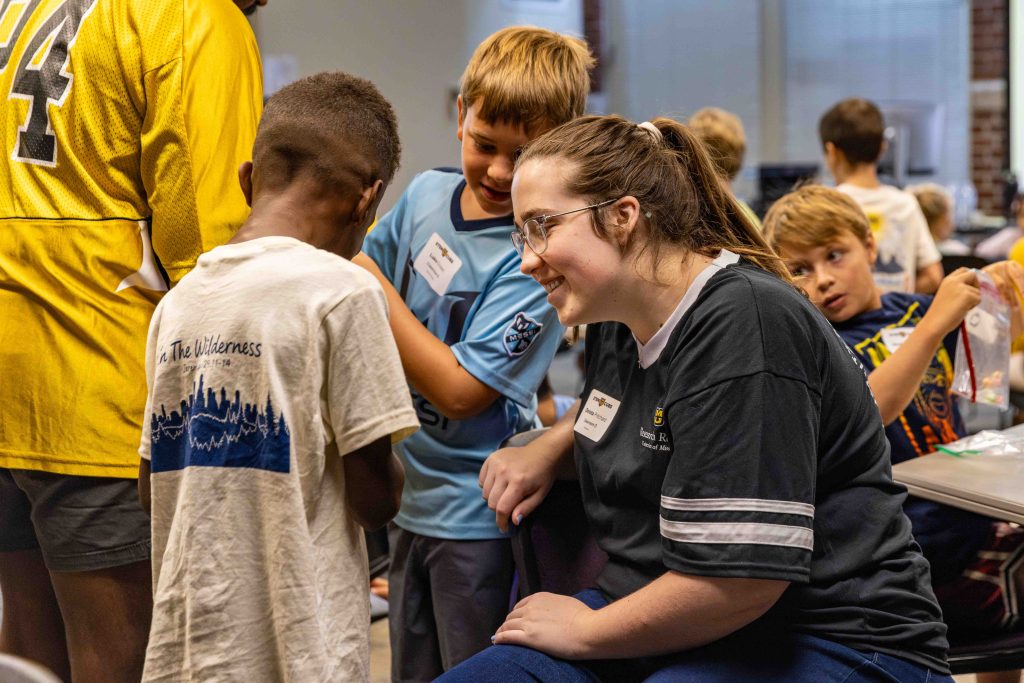
Nearly 200 young scientists, engineers and innovators filled the halls of the University of Missouri on a Saturday in July, eager to build, experiment and discover.
For many of the sixth- through eighth-grade students participating in STEM Cubs: Middle Connections, it was their first opportunity to experience STEM the way real scientists and engineers do — not through worksheets or lectures, but by solving problems, testing ideas and creating something with their own hands.
Launched four years ago, Middle Connections serves a critical role in maintaining STEM interest within the elementary to high school transition. After several years of modest enrollment, interest is accelerating. The program has already welcomed 66 middle school participants across its spring and summer sessions this year — more than double the total enrollment across all events in 2025 — with another event still to come.
For Ana Galicia, assistant director of the Office of Clinical Experiences and Partnerships in the College of Education & Human Development and a member of the STEM Cubs coordinating team, the growth reflects something deeper than increasing attendance.
“STEM experiences outside of the classroom help middle school students see that science is not just something they learn in school,” Galicia said. “Whether they’re exploring nature, solving a real-world problem or participating in a hands-on activity, they’re making meaningful connections between what they’re are learning and the world they live in.”
Those experiences are especially important during the middle school years, when students begin thinking more seriously about their interests and future careers.
“These experiences foster curiosity, build confidence and encourage creativity during a pivotal transition,” Galicia said.
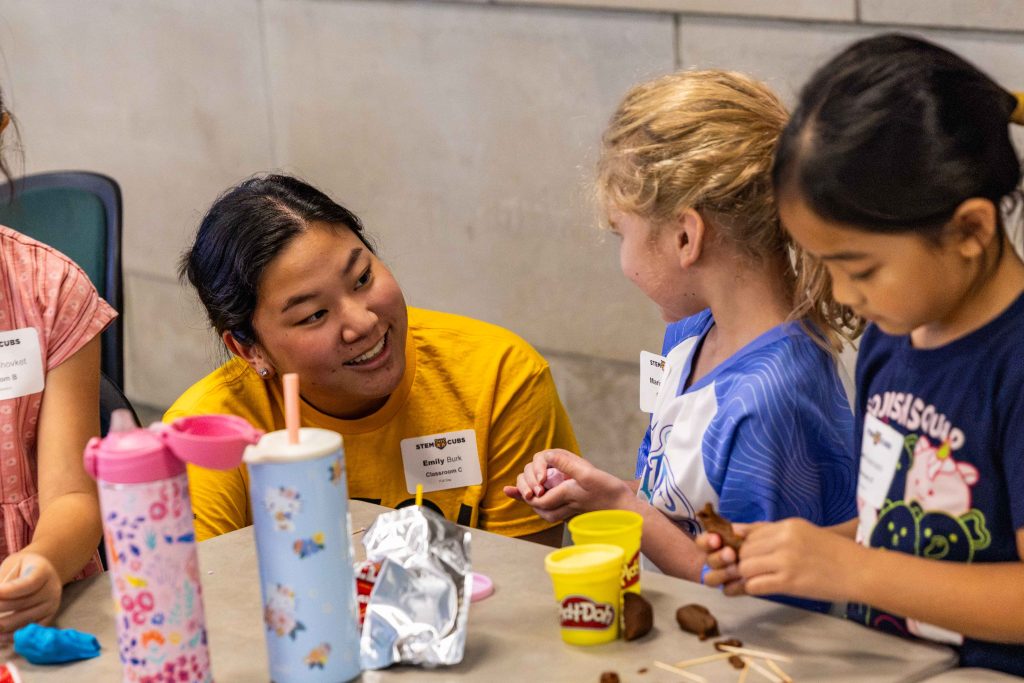
Engineering comes to life
This summer, Middle Connections tackled one of the most ambitious STEM Cubs projects to date.
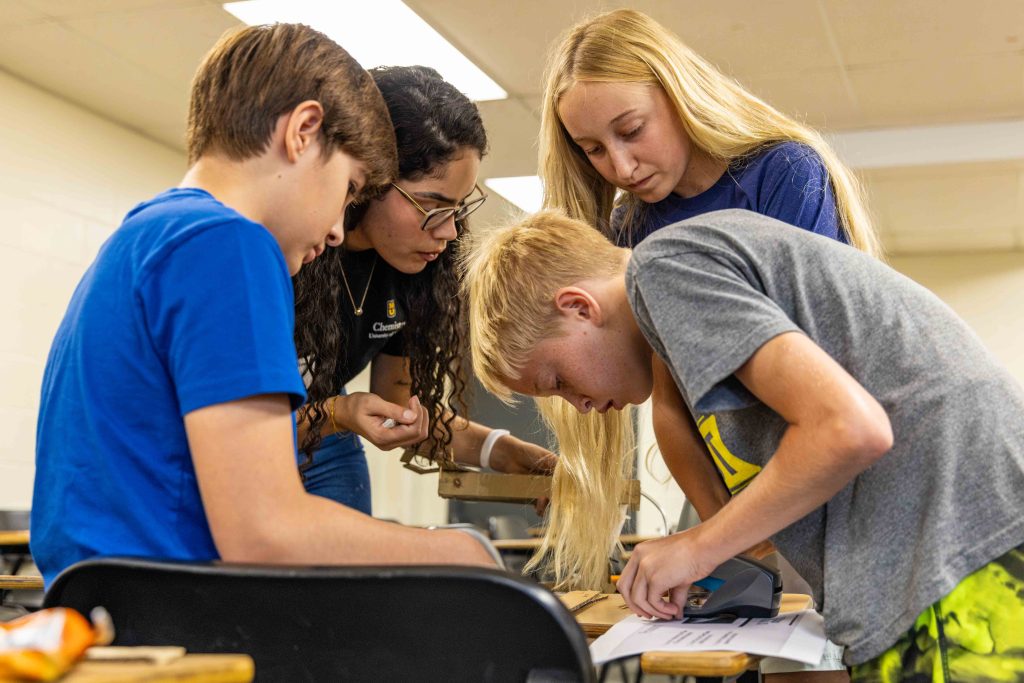
Designed and taught by chemistry doctoral student Amrut Ramaratnam, the lesson introduced students to hydraulic engineering by challenging them to design and build working cranes powered by air-filled syringes.
Using cardboard, tubing, wire, toothpicks and glue, teams engineered cranes capable of rotating and lifting an aluminum can. Along the way, students explored concepts such as force, pressure, and design specifications while learning that engineering is often a process of trial, error and teamwork.
The project wasn’t easy — and that was exactly the point.
Rather than simply following instructions, students learned to troubleshoot problems, revise designs, and celebrate incremental successes together.
For Ramaratnam, one moment made the preparation worthwhile.
“The moment of awe in the kids when they see a textbook concept come to life during their classroom activity,” he said.
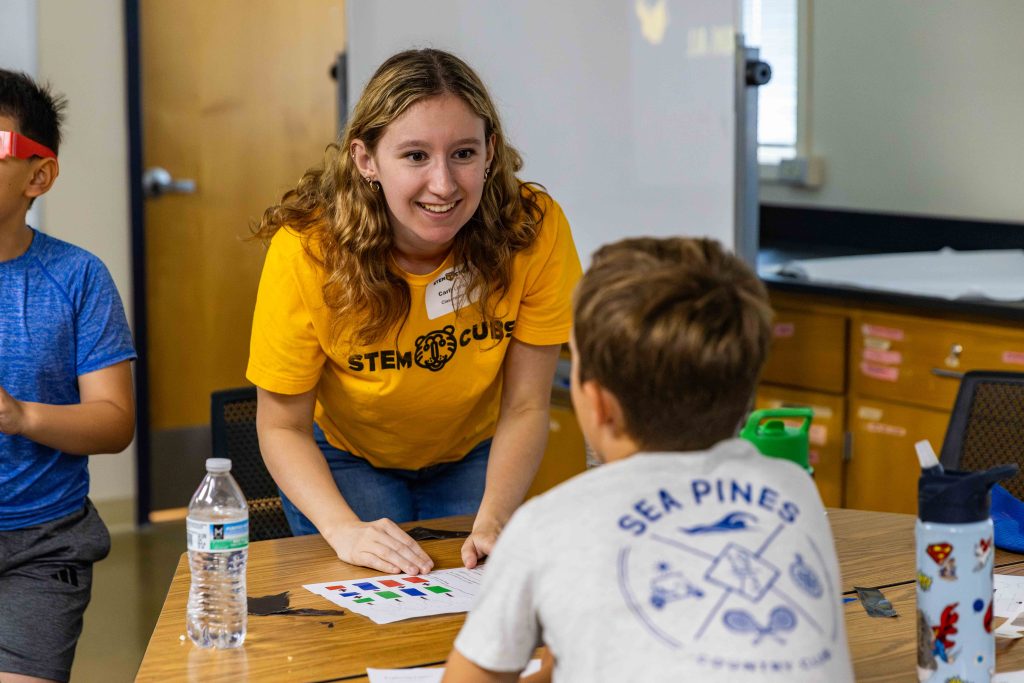
Learning goes both ways
While hundreds of children leave STEM Cubs with new excitement about science and engineering, the college students who teach the lessons gain something just as valuable.
Graduate and undergraduate instructors spend weeks developing lesson plans, participating in training workshops and practicing how to communicate complex scientific concepts in ways younger students can understand.
Whether they plan to become classroom teachers, researchers, physicians or engineers, the experience strengthens leadership, communication and mentoring skills while giving them the opportunity to inspire the next generation of STEM professionals.
“It is a wonderful reminder that creating positive learning experiences is not just the work of future teachers,” Galicia said. “It takes people from many different backgrounds who care about helping young people grow, explore and discover what is possible.”
Building Missouri’s future STEM workforce
STEM Cubs demonstrates the power of collaboration across the University of Missouri.
The program, a partnership between the College of Education & Human Development and the College of Engineering, combines research-based teaching practices with authentic STEM experiences that encourage young learners to imagine themselves in scientific and technical careers.
As interest in Middle Connections continues to grow, so does its impact, not only by helping middle school students discover the excitement of STEM, but by preparing Mizzou students to become confident educators, mentors and leaders.
STEM Cubs is supported by a generous gift from the Veterans United Foundation.
The next STEM Cubs event is planned for this fall. For more information, please contact Jenn Brown.
Summer 2026 lessons and instructors
A special thank you to the instructors!
- Grades K-2 Light and Rainbows, Carli Lentz (Graduate student, Biological Sciences) and Brett Boney (Senior, Biological Sciences; Chemistry)
- Grades K-2 Heart Functions, Gauge Shaw (Graduate student, Medical Pharmacology and Physiology)
- Grades K-2 Genes and Enzymes, Gibson Tschappler (Senior, Biochemistry)
- Grades 3-5 DNA and UV Light, Ellen Mazalale (Doctoral candidate, Biological Sciences)
- Grades 3-5 Environmental Conservation, Katie Whitmarsh (City of Columbia, Office of Sustainability)