Small nudges, big impact in math classrooms
Story by Emily Kebert
Small changes can be hard to notice in the moment. In a math classroom, though, they can open the door to better questions, clearer thinking, and more confident students.

That idea is behind Instructional Nudges for Math Teachers, a National Science Foundation-funded project co-led by Dr. Samuel Otten, professor in the College of Education & Human Development, with Dr. Zandra de Araujo at the University of Florida and Dr. Amber Candela at the University of Missouri–St. Louis. The work is part of Practice-Driven PD, a broader effort built around a simple premise: teaching is intense, so professional development shouldn’t be. Instead of asking teachers to overhaul everything, the project offers small, free teaching suggestions designed to fit into the classrooms they already have and the lessons they are already teaching.
“An instructional nudge is a very small teaching strategy that we offer to teachers so they can try it out in their own classroom,” Otten said. The nudges are intentionally brief so teachers can understand them quickly, adapt them to their own style, and decide whether to keep using them.
That small-scale approach matters because traditional professional development often asks teachers to do something difficult. It might call for major shifts in classroom structure or long-term changes that take time to implement. For teachers who are already stretched thin, that can turn a good idea into an unreasonable demand.
Otten’s team is taking a different approach: focus on what’s doable right now. The goal is not to leap to a perfect classroom overnight. In fact, perfection is not the goal at all. Instead, the aim is to help math instruction improve in steady, manageable ways.
The response from teachers has been clear. Across more than 50 math teachers in 14 states, one message stands out: educators value changes they can implement immediately and that make a noticeable difference for students.
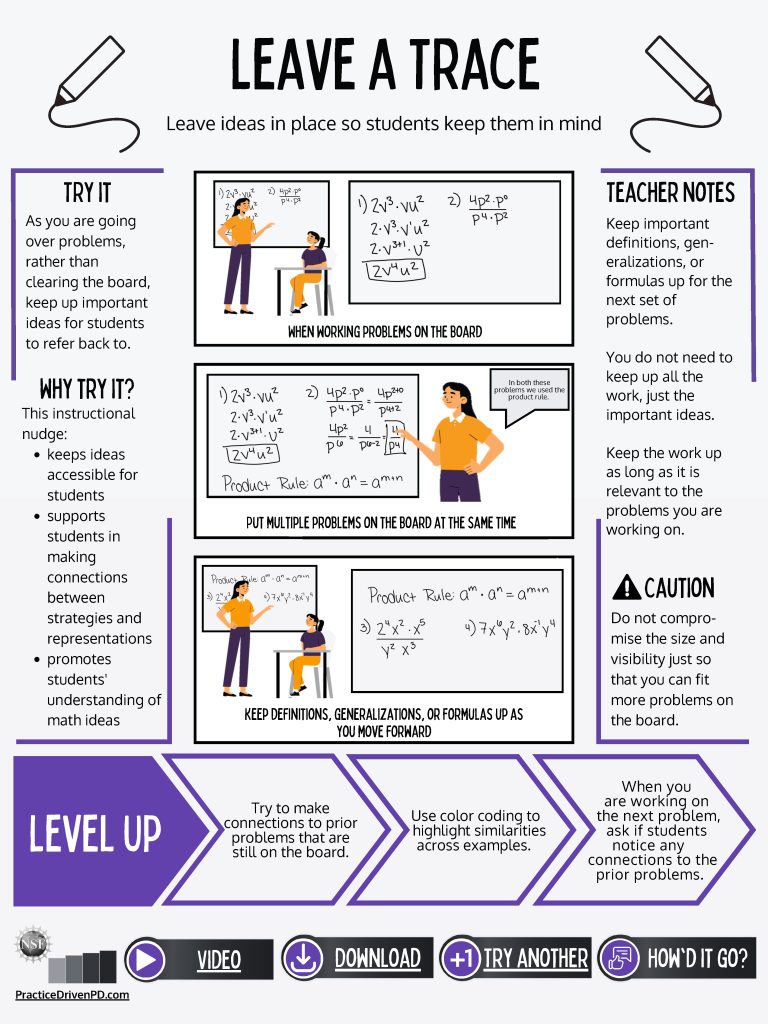
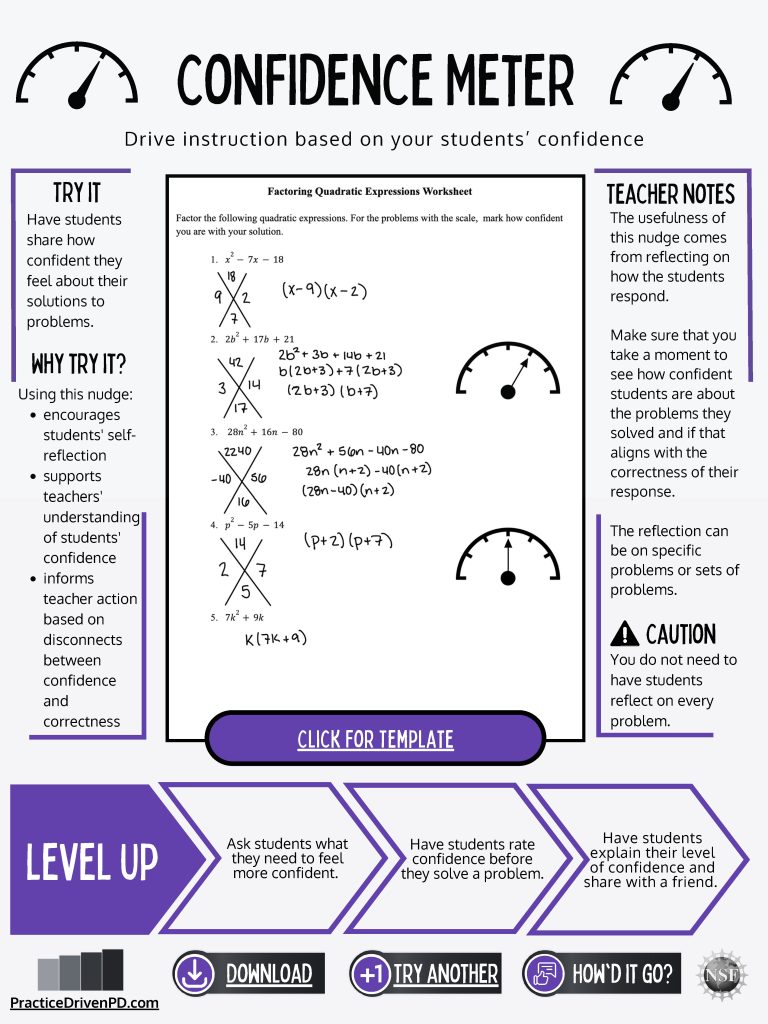
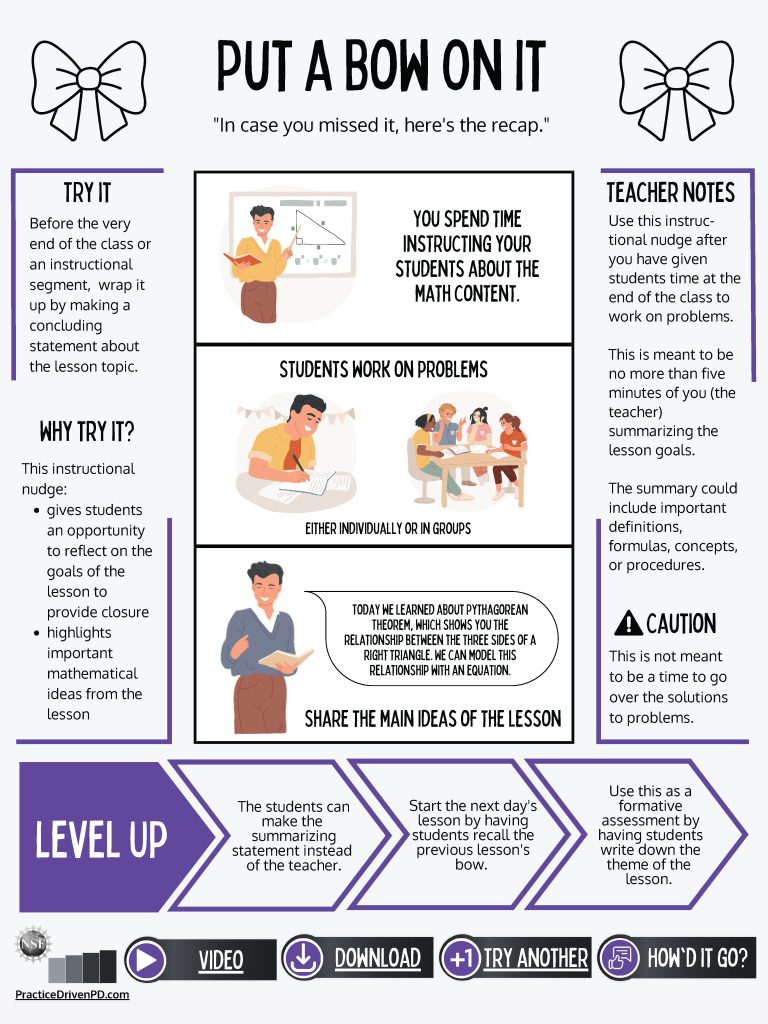
Three of the most popular examples show what that can look like. Leave a Trace encourages teachers to keep key ideas visible on the board so students can make connections across problems. Confidence Meter invites students to share how confident they feel about their work, giving teachers insight into understanding and misconceptions. Put a Bow On It wraps up a lesson with a short, focused summary of the main idea.
Educators across Missouri have embraced the approach as a practical addition to their professional learning. “Dr. Otten’s Practice-Driven Professional Development nudges have been so well-received by educators across the state of Missouri,” said Traci Gardner, director of mathematics for the Missouri Department of Elementary and Secondary Education. “Teachers are able to adopt small changes in their instruction that are both research-based and high-leverage practices that create a positive impact in their classrooms. The format allows teachers to personalize their professional development to the instructional practices that work best for their teaching style and workload.”
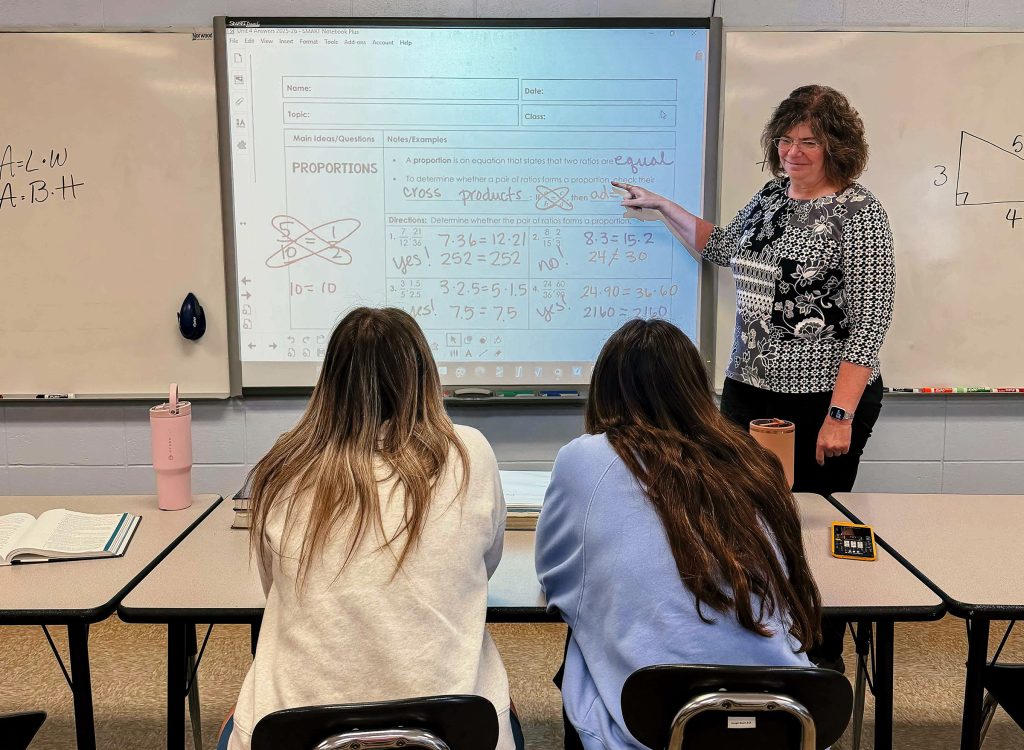
Hallsville High School math teacher Melissa Hough said the nudges work because they respect teachers’ limited time while still encouraging meaningful thinking in the classroom.
“Teachers today have many demands on their time, and professional development that is time-intensive can be difficult to fit into busy schedules,” Hough said. “The nudges provide strategies that can be immediately incorporated into the classroom and adapted for students of different ages and math abilities.”
One of Hough’s favorite nudges is Examples/Non-Examples, which asks students to identify both examples and non-examples of a mathematical concept. She said the activity pushes students to think critically and develop a deeper understanding of the material.
The project’s influence is also extending beyond Missouri. Four graduates of Mizzou’s mathematics education doctoral program contributed to Practice-Driven PD and are now faculty at universities across the country, carrying the work forward in their own teaching and research.
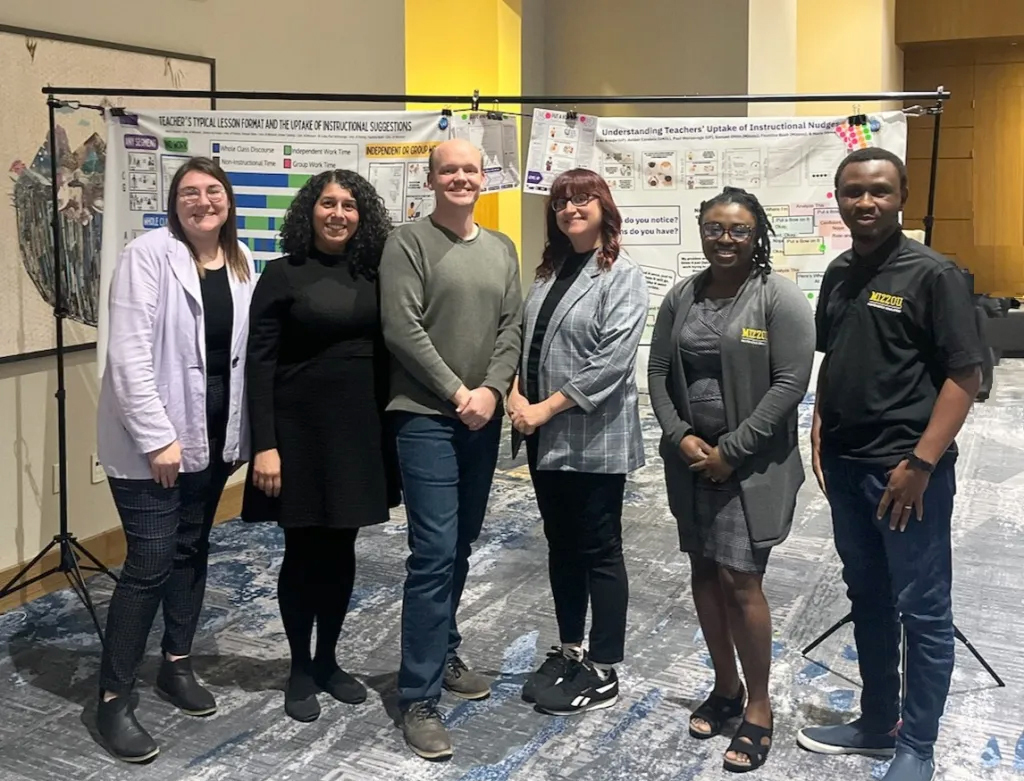
One of them, Dr. Maria Stewart, now an assistant professor at Oklahoma State University, has incorporated instructional nudges into teaching methods courses for future elementary teachers.
“During my time working on Practice-Driven PD, I realized these nudges could be valuable not just for in-service teachers, but also for preservice teachers learning how to teach for the first time,” Stewart said.
In one lesson focused on fraction operations, Stewart used the Reversal nudge, where students are given an answer and asked to create a problem that leads to it. Future teachers were challenged to create different problems that all resulted in an answer of one-half.
“The activity engaged students in the mathematics while also giving them something they could use in their own future classrooms,” Stewart said. “I’m excited to see how they continue using the nudges with their own students.”
For Otten, that kind of impact is both professional and personal. At this point in his career, he said, his primary focus is on helping teachers succeed in real classrooms.
“There’s something really rewarding about creating something teachers actually want to use,” Otten said. “If we can make their work a little easier and a little more effective, that’s a meaningful contribution.”
The nudges may be small, but that also makes them shareable and their reach continues to grow, offering a practical path toward stronger math instruction one step at a time.
Educators are encouraged to explore the instructional nudges, try them in their own classrooms and share them with others. Learn more.